Vervain
Other plantsThe Herb of Enchantments
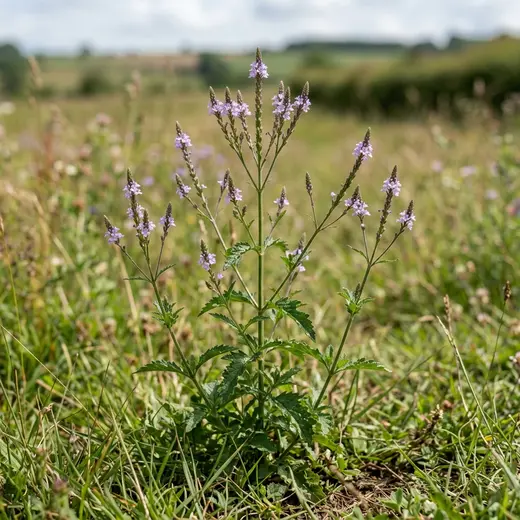
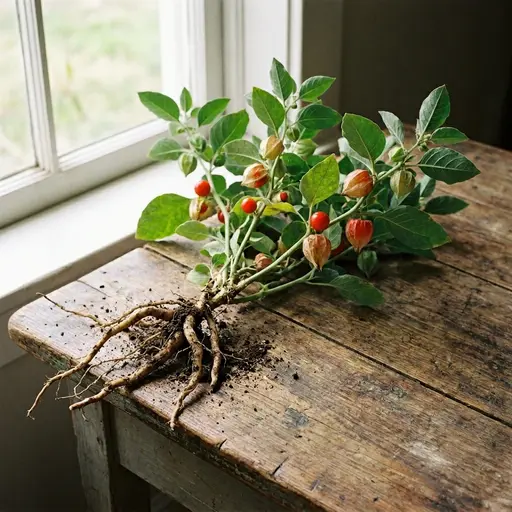
In the Middle Ages, vervain was among the most mysterious plants in European herbals. It was said to be worn as an amulet to attract protection and placed under the pillow to encourage dreams. Behind these stories, however, lies a very real plant: its flowering tops were traditionally used by herbalists in preparations intended for calm and rest.
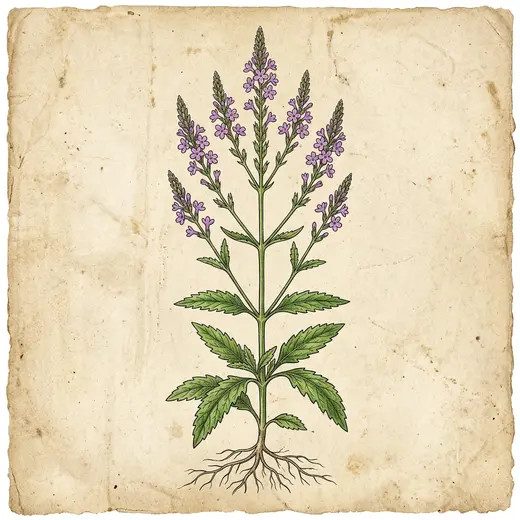
Medicinal properties
Flowering tops
Traditionally used to promote relaxation and rest. Vervain is often associated with calm, particularly during periods of tension or at the end of the day.
Recipe
Vervain Wine
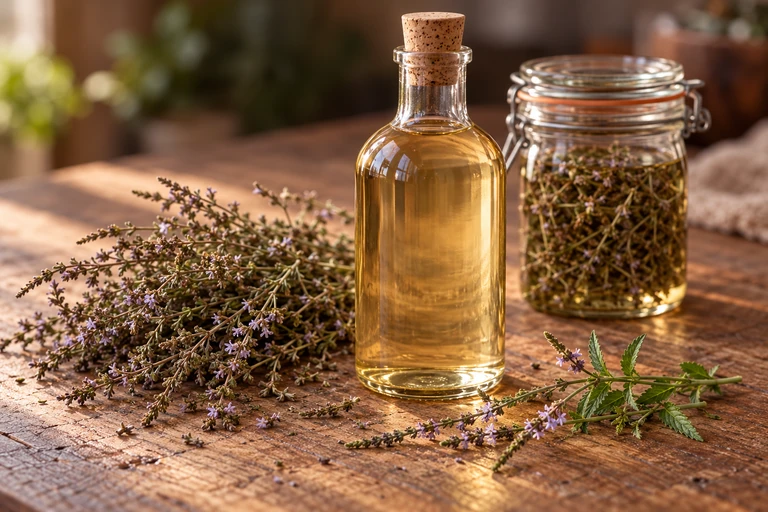
- Plant part
- flowering tops
- Duration
- 7 days
Ingredients
- 20 g dried vervain flowering tops
- 500 ml white wine
Preparation
- Place the vervain in a clean jar.
- Pour the white wine over the herb.
- Seal the jar and let macerate for 7 days away from direct light.
- Strain the preparation and store the liquid in a clean bottle.
Sources and references
- Larkin, Deirdre. Holy Vervain. The Medieval Garden Enclosed, The Metropolitan Museum of Art, 1 July 2011. Verbena officinalis in medieval and Renaissance magic, its use as an amulet, and historical sources including Pliny, Gerard, Grigson and Stannard.
- Reufner, Laurel. Pillow Charm. Llewellyn, 6 July 2008. Author-described folklore practice placing a sachet containing vervain, lavender and patchouli under a pillow for restful sleep and pleasant dreams. A contemporary account of dream-pillow lore, not a dated medieval prescription.
- Koshovyi O, Dolgošev G, Meegama UW, et al. Verbena officinalis L. Herb Extract, Its Amino Acid Preparations and 3D-Printed Dosage Forms: Phytochemical, Technological and Pharmacological Research. Plants. 2025;14(17):2651. doi:10.3390/plants14172651. Introduction documents traditional use to calm the nervous system and for stress, anxiety and insomnia. Experimental extract results are preclinical; human effects require clinical studies. Supports documentation of traditional use, not regulatory approval or proven efficacy in humans.
- Tucci, Alberto. Verbena officinale — Tintura vinosa o vino alla verbena. Erbeofficinali.org, updated 6 May 2026. Dried flowering tops, white wine, sealed glass container, maceration protected from light and filtration. Published proportion: 5 g per 100 ml, equivalent to 25 g per 500 ml. Main maceration time is about 5 days, with traditional variants of 7–10 days. This documents the preparation method but does not establish the card’s exact 20 g per 500 ml for 7 days.