Ashwagandha
Other plantsThe Horse Root
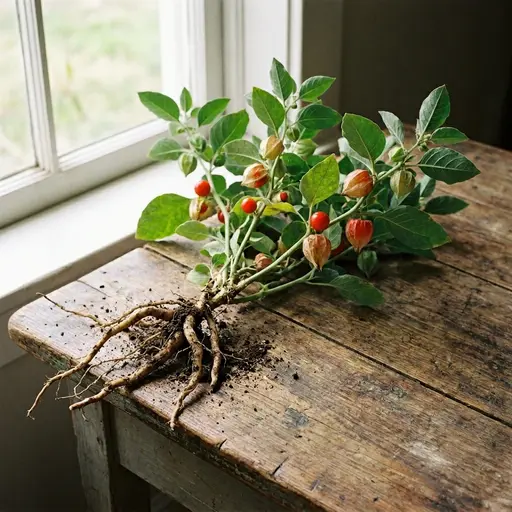
In the Ayurvedic tradition, ashwagandha holds a special place among rasayana plants, associated with vitality, recovery, and resistance to stress. Its name evokes the horse: the root has a strong, earthy, almost animal scent, which helped build its image as a plant of strength.
Behind its modest appearance as a small shrub lies a dense root, long used in preparations intended for calm, inner endurance, and rest.

Medicinal properties
Root
Traditionally used in Ayurveda as an adaptogenic herb, the root is associated with supporting the body during periods of stress, mental fatigue, or recovery.
Root
It is also traditionally linked to nervous calm and sleep, especially when restlessness or nervousness interferes with rest.
Recipe
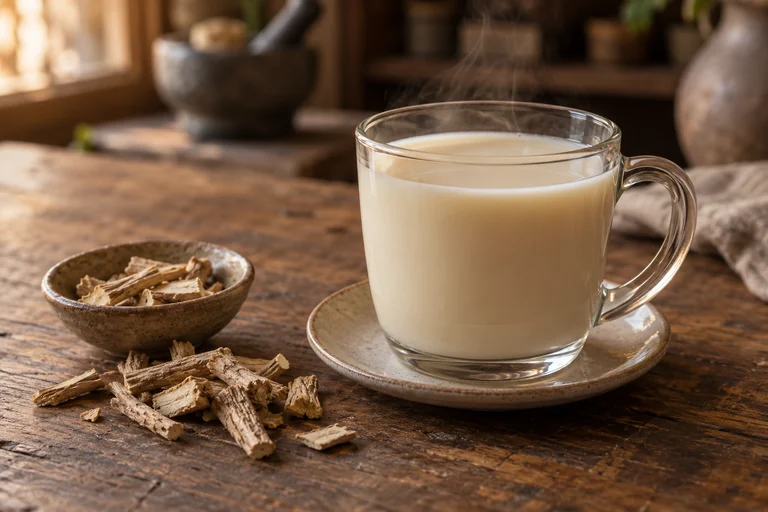
Gentle Ashwagandha Decoction
- Plant part
- root
- Duration
- 10 minutes
Ingredients
- 2 g dried ashwagandha root, cut or powdered
- 250 ml water or milk
- 1 tsp honey, optional
Preparation
- Place the ashwagandha root in a small saucepan.
- Add the water or milk, then bring gently to a simmer.
- Let simmer gently for 10 minutes.
- Strain if using cut root, or stir well if using powder.
- Let cool slightly before adding honey.
Sources and references
- Singh N, Bhalla M, de Jager P, Gilca M. An Overview on Ashwagandha: A Rasayana (Rejuvenator) of Ayurveda. African Journal of Traditional, Complementary and Alternative Medicines. 2011;8(5 Suppl):208-213. Introduction and Classical Uses, pp. 208-209.
- Health Canada. Natural Health Product Monograph: Ashwagandha - Withania somnifera. February 28, 2025. Traditional Ayurvedic uses, adaptogen, restlessness, nervousness and sleep.