Star Anise
Other plantsThe Star That Became Medicine
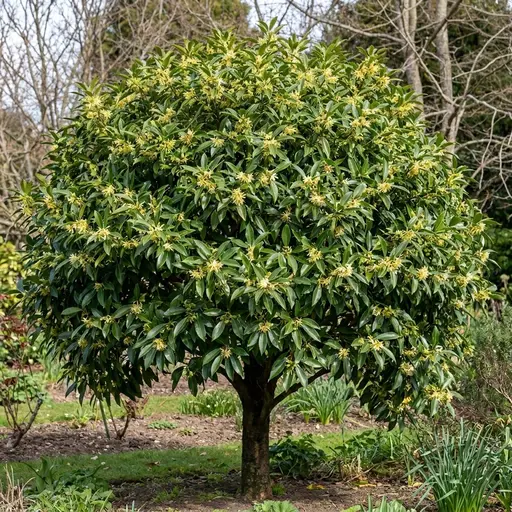
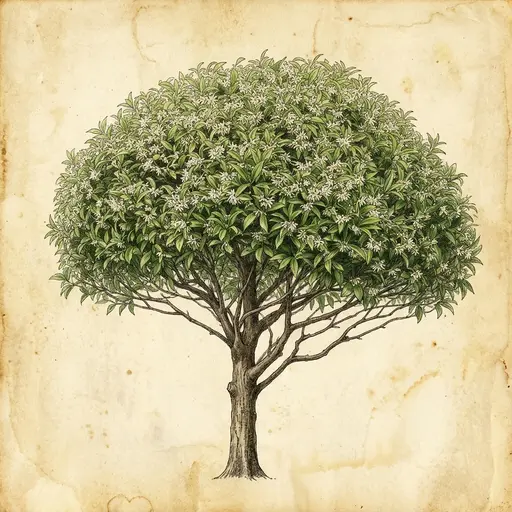
In 1178, Zhou Qufei described star anise as a culinary spice of southern China. It appeared in medicinal texts in 1505, and in 1578 Li Shizhen described its usually eight-pointed fruit in the Bencao Gangmu: the fragrant star had become both a spice and a remedy in the Chinese pharmacopoeia.
Native to southern China and northern Vietnam, Illicium verum had long circulated throughout East and Southeast Asia. From the late sixteenth or seventeenth century onward, it also entered European trade networks, further extending the circulation of this anise-scented spice.
Medicinal properties
Fruits
The dried fruit of star anise has been used for centuries in traditional Chinese medicine as a carminative and digestive remedy. It is notably associated with abdominal pain, colic, bloating and vomiting. Its essential oil is particularly rich in trans-anethole, which is responsible for its characteristic aroma and flavour.
Fruits
In the Chinese pharmacopoeia, star anise is traditionally described as a plant that ‘regulates Qi’ and relieves certain digestive pains. The dried fruits may be used in decoctions, ground into powder or incorporated into compound medicinal preparations.
Recipe
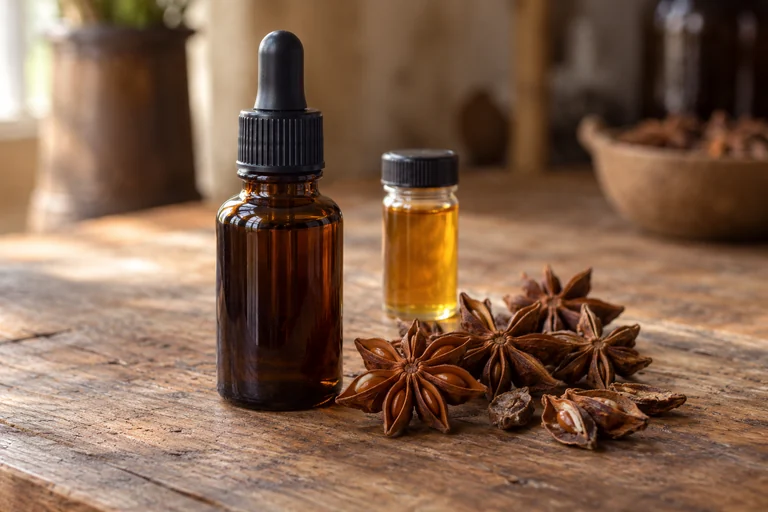
Star Anise Tincture
- Plant part
- fruits
- Duration
- 2 to 3 weeks
Ingredients
- 10 g dried star anise fruits, coarsely crushed
- 70% alcohol, in a sufficient quantity to obtain 100 ml of tincture
Preparation
- Coarsely crush the star anise using a mortar.
- Place 10 g of the fruits in a clean jar.
- Add the 70% alcohol until you have approximately 100 ml of preparation.
- Close the jar and leave it to macerate away from light, shaking it regularly.
- Strain carefully and store the tincture in a closed bottle.
Sources and references
- Zou Q, Huang Y, Zhang W, Lu C, Yuan J. A Comprehensive Review of the Pharmacology, Chemistry, Traditional Uses and Quality Control of Star Anise (Illicium verum Hook. F.): An Aromatic Medicinal Plant. Molecules. 2023;28(21):7378. doi:10.3390/molecules28217378.
- Wang GW, Hu WT, Huang BK, Qin LP. Illicium verum: A review on its botany, traditional use, chemistry and pharmacology. Journal of Ethnopharmacology. 2011;136(1):10–20. doi:10.1016/j.jep.2011.04.051.
- Brazilian Pharmacopoeia, 6th edition. Star Anise, tincture — Anisi stellati fructus tincture. PM086-00. Tincture prepared at 10% w/v with 70% ethyl alcohol.
- Royal Botanic Gardens, Kew. Illicium verum Hook.f. Plants of the World Online. Native range: southern China to northern Vietnam.