Red Clover
Other plantsDarwin, Cats and Bumblebees
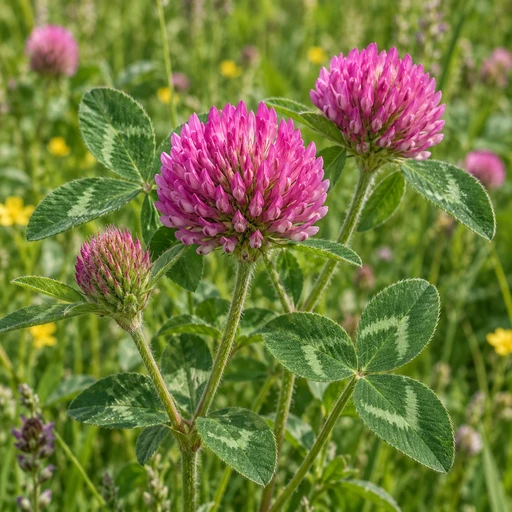
In 1859, in his famous book On the Origin of Species, Charles Darwin told a remarkable story linking cats, mice, bumblebees and red clover.
Darwin had observed that bumblebees played an essential role in pollinating red clover. But field mice destroyed their nests, while cats hunted those mice.
He therefore suggested that a village with more cats might support more bumblebees and, indirectly, favour the reproduction of red clover.
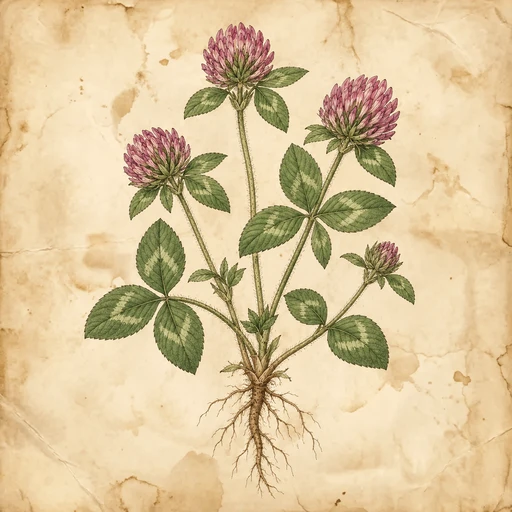
Medicinal properties
Flowers and flowering tops
Alterative and skin support: traditionally used as an alterative and lymphatic herb, red clover is associated with supporting the body's natural elimination processes. Herbalists use it particularly for skin prone to eczema, psoriasis and acne.
Flower heads
Respiratory antispasmodic: traditionally used to ease spasmodic coughs and support irritated airways. Red clover appears in several historical herbal cough preparations.
Flowers and flowering tops
Phytoestrogenic: naturally rich in isoflavones, notably biochanin A and formononetin, red clover is being studied for its influence on menopausal symptoms, particularly hot flashes. Clinical results vary with the extracts studied.
Recipe
Red Clover Flower Vinegar
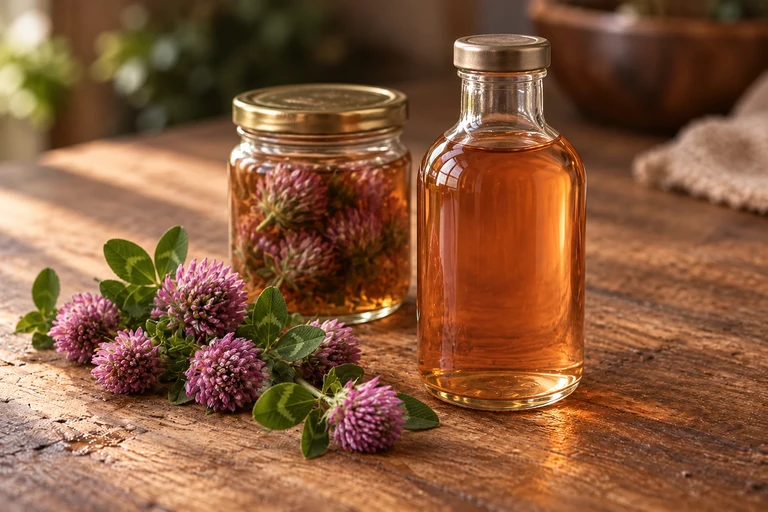
- Plant part
- flower heads
- Duration
- 3 to 4 weeks of maceration
Ingredients
- Clean, correctly identified, well-drained red clover flower heads, enough to loosely fill a jar
- Apple cider vinegar with 5% acidity, enough to completely cover the flowers
- One clean glass jar of about 500 ml
- One lid that does not react with vinegar
Preparation
- Harvest fully open red clover flower heads in dry weather, away from roads and chemically treated areas.
- Remove wilted, browned or damaged flowers, along with excess stems and leaves.
- Clean the flowers if necessary, then drain them thoroughly to limit the water added to the vinegar.
- Loosely fill the jar with flower heads without packing them tightly.
- Pour in apple cider vinegar until the flowers are completely covered.
- Close with an acid-resistant lid. If the lid is metal, use a barrier suitable for contact with vinegar.
- Macerate for 3 to 4 weeks in a cool place away from light, checking that the flowers remain submerged.
- Carefully strain through cheesecloth or a fine sieve, then discard the flowers.
- Pour the flower vinegar into a clean bottle, label it with the plant name and preparation date, then refrigerate.
Sources and references
- Charles Darwin. On the Origin of Species. First edition, 1859. Chapter III, pp. 73–74: cats, field mice, bumblebees and red clover. Darwin Online.
- Aviva Romm. Botanical Medicine for Women's Health. Traditional alterative and skin-related uses of red clover.
- Drugs.com. Red Clover Uses, Benefits & Dosage. Historical respiratory and skin uses; isoflavones and clinical research.
- The Herbalist's Apothecary. The Herbal Benefits of Red Clover (Trifolium pratense).
- University of Alaska Fairbanks, Cooperative Extension Service. Flavored Vinegars. Flower vinegar techniques and refrigerated storage. Original method pours heated vinegar over flowers; this card adapts the technique and steeping duration without that heating step.
- Gamiing Nature Centre. The edible wild plants of the Gamiing Nature Centre: A guide to recognizing, harvesting and eating local wild plants in the Kawartha Lakes region. Clover Vinegar. Alternative method using heated vinegar.
- National Center for Complementary and Integrative Health. Red Clover: Usefulness and Safety. Clinical evidence and precautions.