Raspberry leaf
Other plantsThe Leaf Behind the Fruit

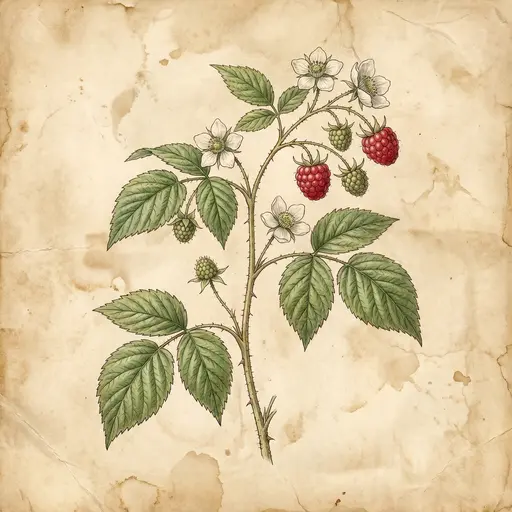
Raspberry is best known for its red fruits, but the herbalist also looks at its leaves. Toothed, green above and paler underneath, they belong to the large Rosaceae family, along with rose, hawthorn, and bramble.
In hedgerows and gardens, raspberry grows flexible canes that return year after year. Its fruits speak of sweetness; its leaves speak more of astringency. In European herbalism, they are dried for simple infusions traditionally associated with menstrual discomfort, irritated mucous membranes, and minor short-lived digestive troubles. Raspberry leaf is also known in traditions around pregnancy, but this use requires professional guidance and should not be presented as a way to induce or speed up labour.
Medicinal properties
Leaves
Traditionally used in adults to help relieve minor spasms associated with menstrual periods.
Leaves
Their tannin content gives them a traditional astringent action, used to accompany mild, short-lived diarrhoea.
Leaves
As a cooled or warm infusion, they are traditionally used as a mouthwash or gargle for minor mouth and throat irritations.
Recipe
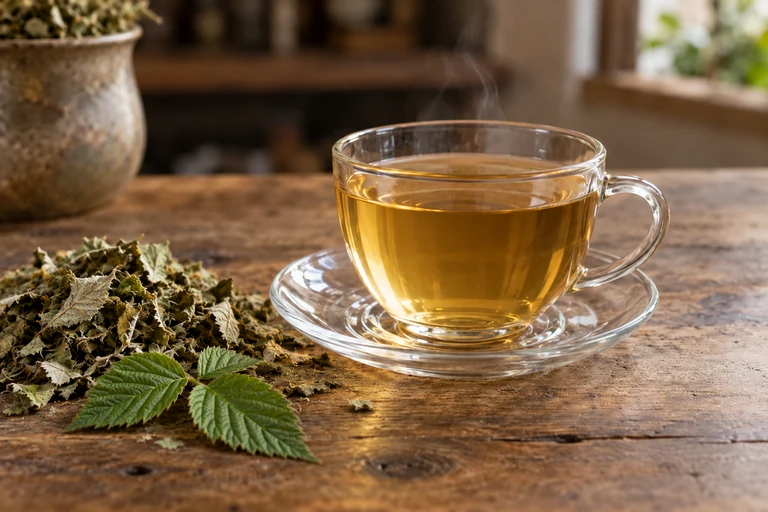
Raspberry Leaf Infusion
- Plant part
- leaves
- Duration
- 10 minutes
Ingredients
- 2 to 3 g dried raspberry leaves
- 250 ml water
- 1 tsp honey, optional
Preparation
- Place the raspberry leaves in a cup or small teapot.
- Pour simmering water over the leaves.
- Cover the cup to keep the heat in while it steeps.
- Steep for 10 minutes.
- Strain carefully, then drink warm; for a mouthwash or gargle, let it cool before use.
Sources and references
- Royal Botanic Gardens, Kew. Plants of the World Online: Rubus idaeus L. Botanical identity, Rosaceae family, perennial shrub habit and leaf descriptions.
- EMA/HMPC. Assessment report on Rubus idaeus L., folium. EMA/HMPC/44209/2012 Corr.1, January 28, 2014. Leaf description and tannins, traditional uses, pregnancy traditions and limitations; section 6 accepts traditional relief of minor menstrual spasms, mild mouth/throat inflammation and mild diarrhoea. Pregnancy use is not recommended by this assessment.