Peppermint
Other plantsThe Apothecaries’ Secret
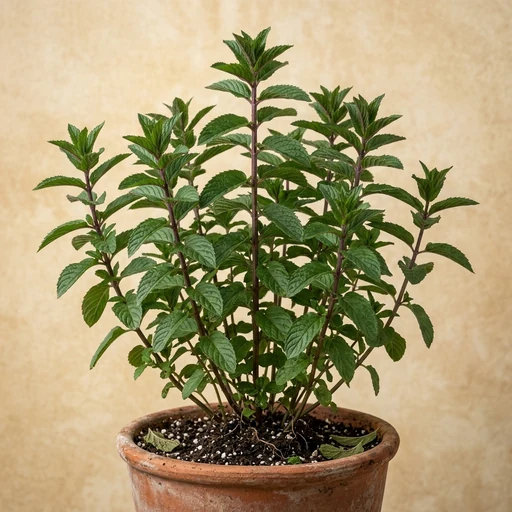
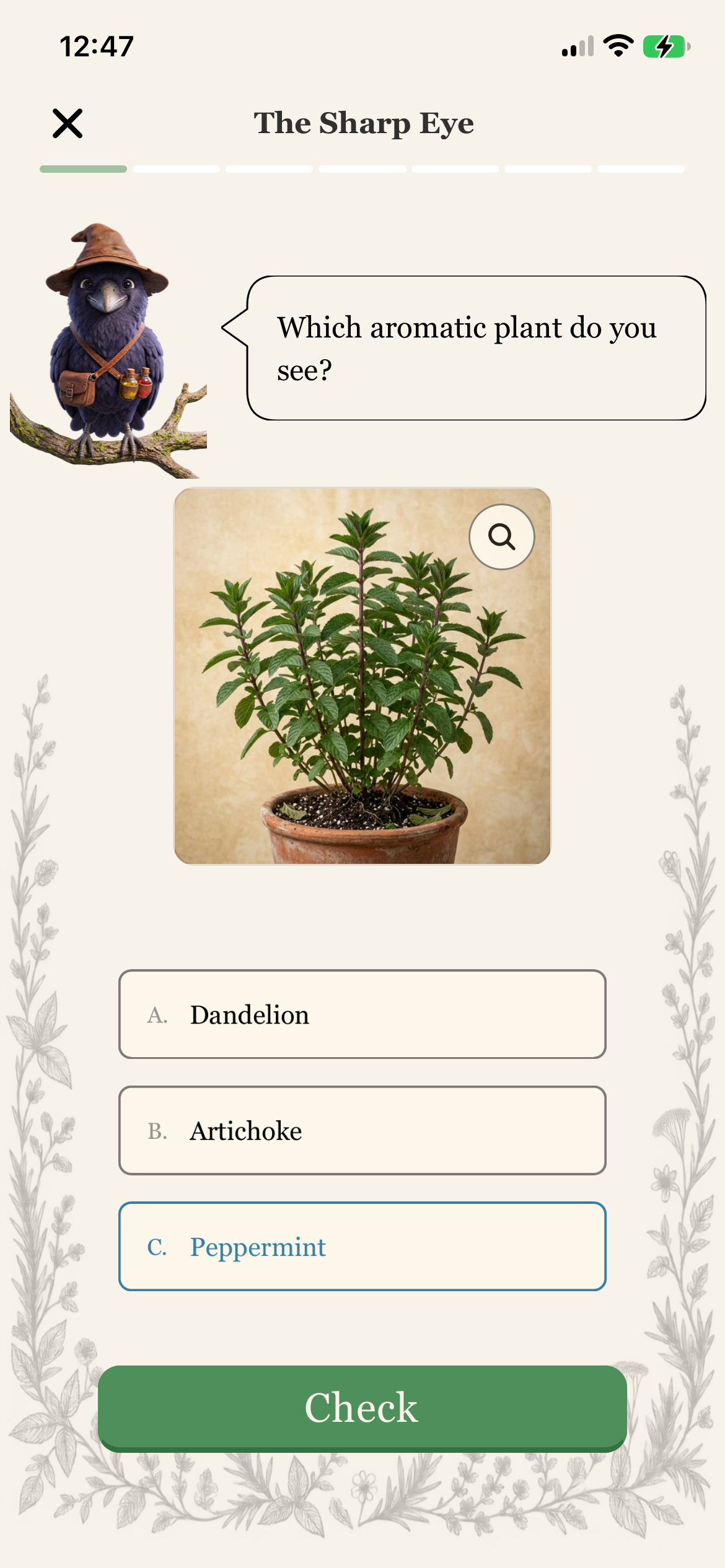
In 1696, the English botanist John Ray first described peppermint as a distinct species, discovered growing wild in England, along streams and millponds. Its medicinal potency soon astonished physicians and apothecaries, proving so effective that some tried to keep it secret to secure a monopoly.
Legend has it that a tiny fragment of the plant was stolen by a rival apothecary, and was enough to spread its cultivation throughout England.
Medicinal properties
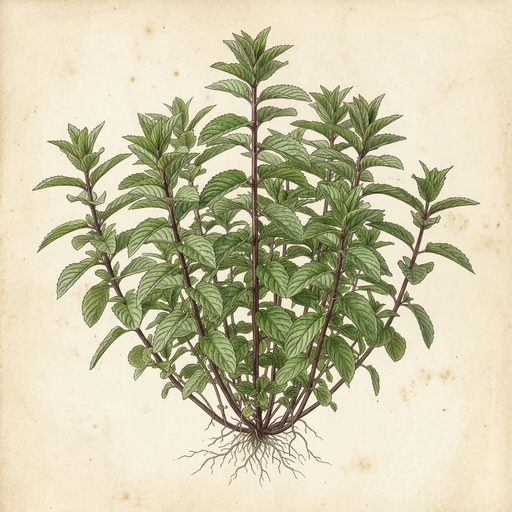
Leaves
Rich in essential oils, its leaves are traditionally used to support digestive comfort. They are notably associated with relaxing digestive muscles and helping relieve gas.
Recipe
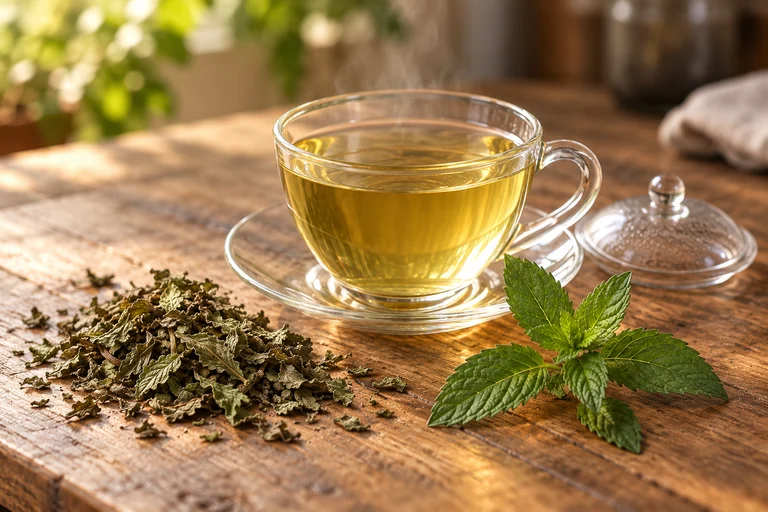
Peppermint Infusion
- Plant part
- leaves
- Duration
- 10 minutes
Ingredients
- 2 g dried peppermint leaves
- 250 ml water
Preparation
- Heat the 250 ml of water to about 90 °C without bringing it to a boil.
- Place the 2 g of dried leaves in a cup or teapot.
- Pour the hot water over the leaves, put a lid on and steep for 10 minutes.
- Strain the infusion to remove the leaves, then enjoy.
Sources and references
- Stéphanie Catrysse. Les bienfaits et conseils préparation d'une infusion à la Menthe poivrée. Aroma-Zone. Section : Comment préparer une infusion de Menthe poivrée à la maison ? Consulté le 12 octobre 2026.
- Dan Allosso. Alchemists in fiction and peppermint history. MakingHistory, 7 April 2025.
- McKay DL, Blumberg JB. A review of the bioactivity and potential health benefits of peppermint tea (Mentha piperita L.). Phytotherapy Research. 2006;20(8):619–633. doi:10.1002/ptr.1936.