Passionflower
Other plantsThe Legend of Mburucuyá
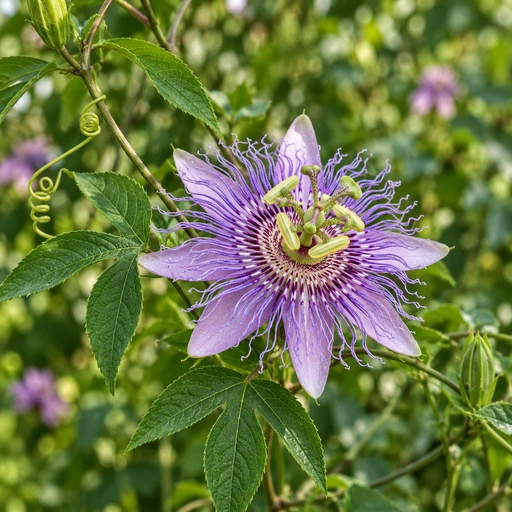
A popular South American legend tells of Mburucuyá, a young Spanish woman who fell in love with a young Guaraní man. Her father opposed their union and had the young man killed.
In despair, Mburucuyá took her own life on her beloved's grave. A plant with extraordinary flowers is said to have grown there, becoming a symbol of their eternal love.
This legend is associated with mburucuyá, a name given to several passionflower species in South America. It therefore does not refer exclusively to Passiflora incarnata.
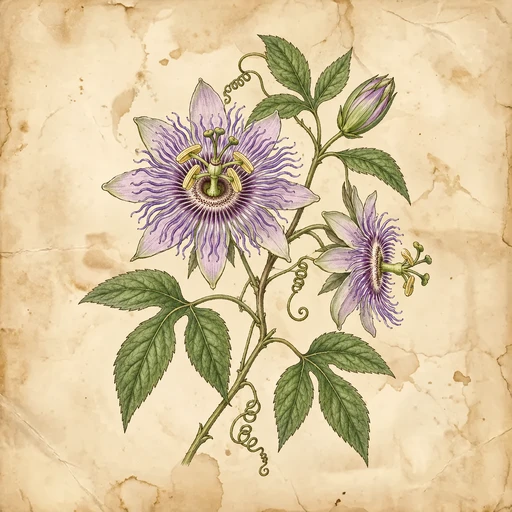
Medicinal properties
Leaves, flowers and tender stems
Calming nervine: traditionally used to ease nervousness, mild stress and mental restlessness. Passionflower is particularly associated with tension accompanied by persistent thoughts.
Leaves, flowers and tender stems
Sleep aid: traditionally used to promote sleep and help with falling asleep, particularly when rest is disturbed by nervousness or mental worries. Both uses appear in European monographs on passionflower, primarily on the basis of its traditional use.
Recipe
Passionflower Tincture
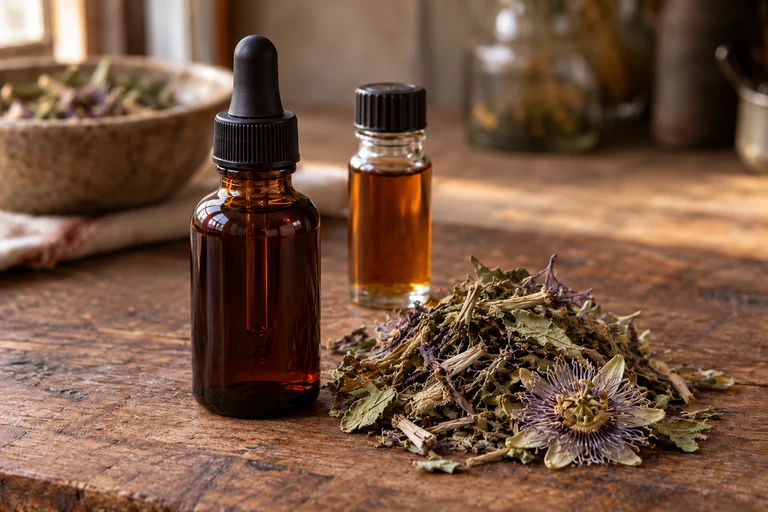
- Plant part
- dried leaves, flowers and tender stems
- Duration
- 2 to 4 weeks of maceration
Ingredients
- 50 g dried, cut passionflower aerial parts
- 250 ml food-grade alcohol at 40–50% ABV
- One clean, airtight glass jar
- One dark glass bottle
Preparation
- Harvest the leaves, flowers and tender stems of correctly identified passionflower, then dry them away from sunlight.
- Cut the dried aerial parts into small pieces and place 50 g of plant material in a clean, dry glass jar.
- Pour 250 ml of food-grade alcohol over the plant material, ensuring it is fully submerged.
- Seal the jar tightly and label it with the plant name, the 1:5 ratio and the date.
- Macerate for 2 to 4 weeks in a cool, dark place, gently shaking the jar every day.
- Carefully strain the preparation through cheesecloth, then press the plant material to recover the liquid.
- Pour the tincture into a dark glass bottle, label it and store away from heat and light.
Sources and references
- Susana C. Otero. Leyenda del M'burucuyá. Identidad Cultural. Adaptation of the popular legend.
- Wikipedia (es). Passiflora — traditions et légendes du mburucuyá. Référence générale au genre, insuffisante pour authentifier à elle seule tous les détails du récit.
- European Medicines Agency. Passiflorae herba — Passiflora incarnata L., herba. Summary for the public: EMA/275240/2014. Traditional uses for mild mental stress and sleep.
- Health Canada. Passionflower — Passiflora incarnata. Natural Health Product Monograph. November 29, 2024.
- Christophe Bernard. Faire une teinture de plantes médicinales : la macération. Althea Provence. General method for dried plants; not validation of this specific working recipe.