Stinging nettle
Other plantsThe Plant That Stings and Nourishes
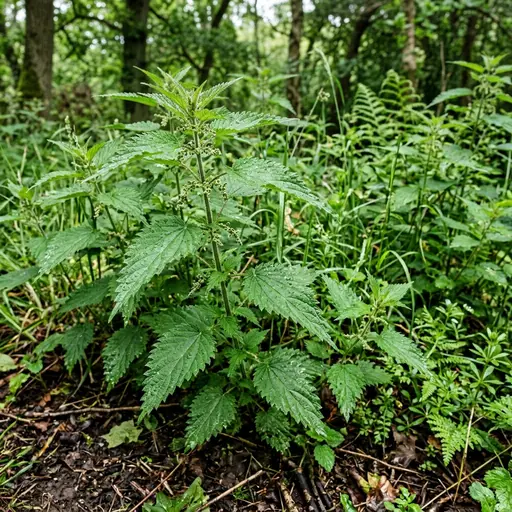
Nettle is a plant many people learn to respect before they truly know it: its stinging hairs irritate the skin at the slightest touch. Yet behind this defense lies one of the great folk plants of ditches, hedgerows, and wild European gardens.
Harvested with gloves, then dried, blanched, or infused, nettle loses its bite and reveals another side: a green, mineral-rich leaf, long used as a spring vegetable, a cleansing tea, and a supportive herb for the joints. Its root belongs to a different herbal territory, more associated with male urinary symptoms linked to the prostate.
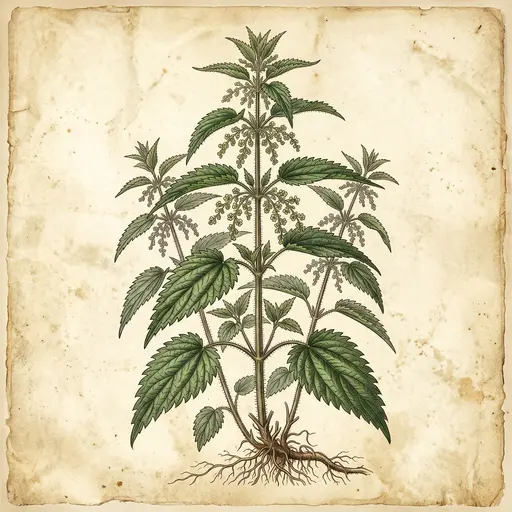
Medicinal properties
Leaves
Considered a nutritive tonic in herbal medicine, nettle leaves are traditionally used to support urinary elimination and help maintain joint comfort.
Root
Nettle root is traditionally used to help relieve mild urinary symptoms associated with the early stages of benign prostatic hyperplasia, after medical advice.
Recipe
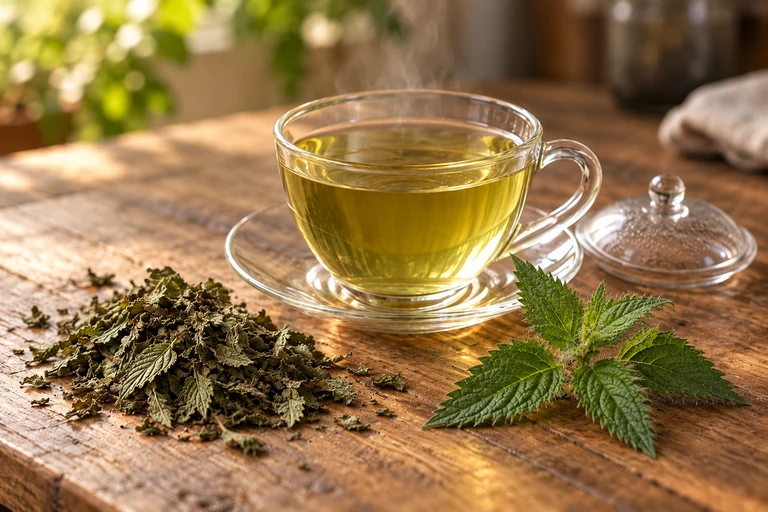
Nettle Leaf Infusion
- Plant part
- leaves and aerial tops
- Duration
- 10 minutes
Ingredients
- 2 to 3 g dried nettle leaves
- 250 ml water
- A squeeze of lemon or 1 tsp honey, optional
Preparation
- Place the dried nettle leaves in a cup or teapot.
- Pour simmering water over the herb.
- Cover to keep the heat in and let the leaves rehydrate.
- Steep for 10 minutes.
- Strain carefully, then drink the infusion warm or hot.
Sources and references
- Grieve, M. A Modern Herbal. Nettles, 1931. Stinging hairs, common European nettles, heat removing the sting, traditional use of young shoots as a vegetable, medicinal and other historical uses.
- Health Canada. Stinging Nettle — Urtica dioica. 27 March 2026. Herb top: nutritive tonic, traditional diuretic and supportive therapy for rheumatic complaints. Root: difficulty in urination associated with early stages of benign prostatic hyperplasia. Medicinal-effects reference only.