Marshmallow
Other plantsThe Candy That Forgot Its Plant
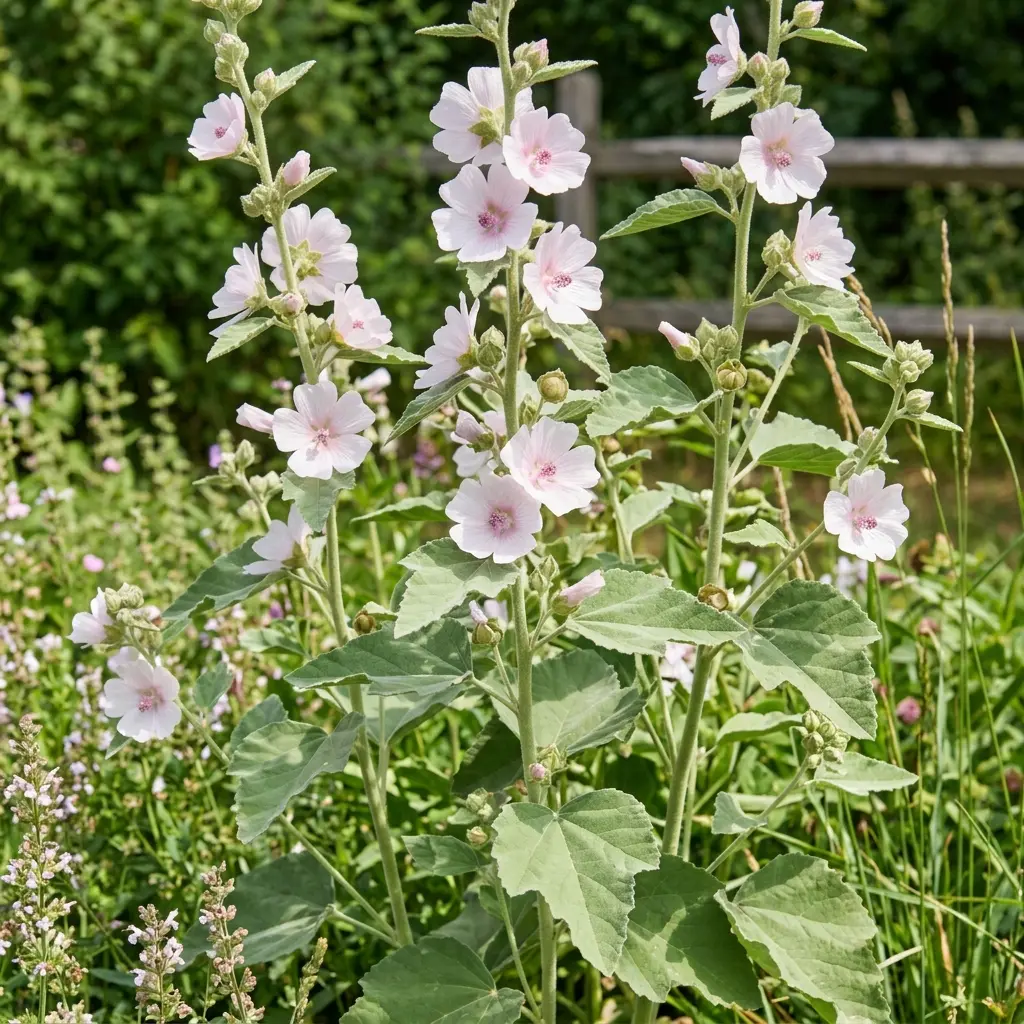
Before it became a confection, marshmallow was first a medicinal plant. In France, apothecaries once prepared marshmallow paste from its mucilage-rich root.
During the nineteenth century, confectioners mixed this plant material with sugar and egg whites to make a soft, airy paste. With industrialization, marshmallow root was gradually replaced by gelatin.
The modern candy therefore kept the name marshmallow, even though it generally no longer contains the plant.
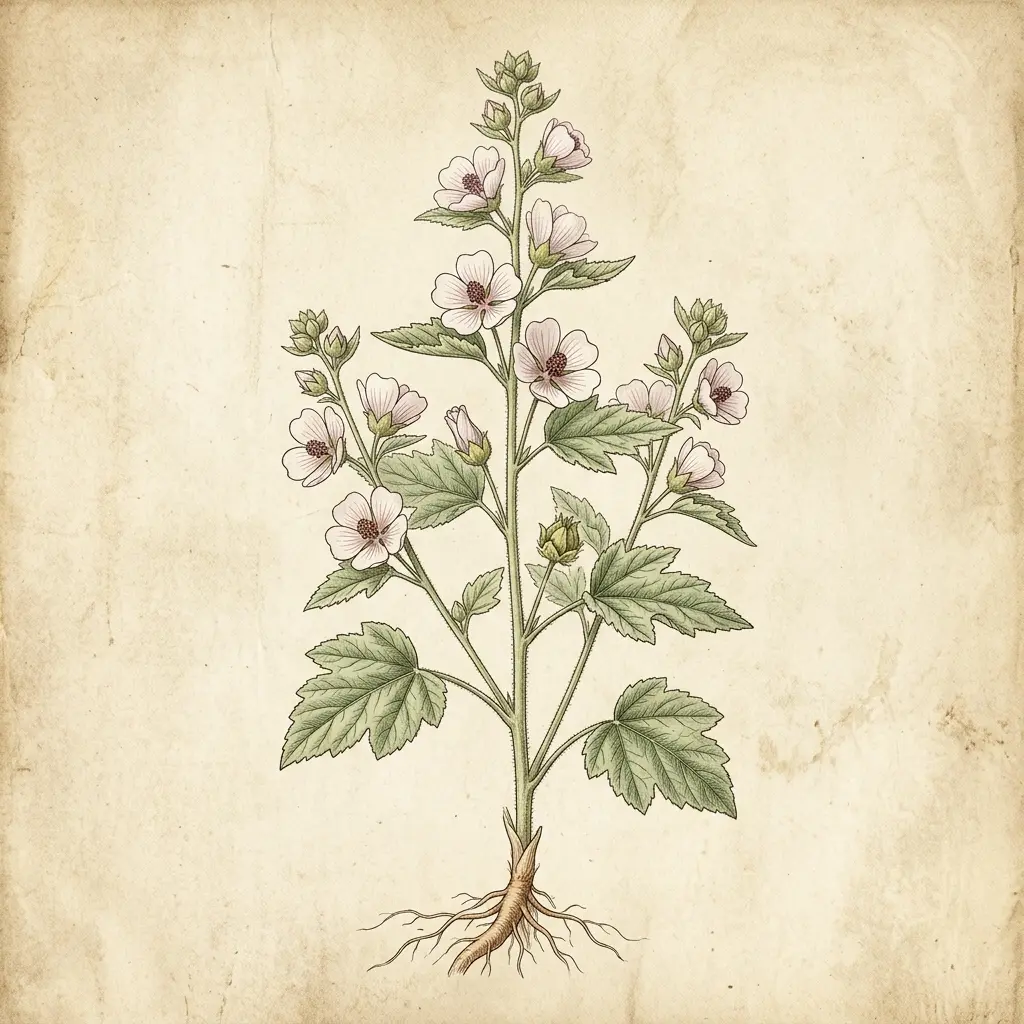
Medicinal properties
Root
Rich in mucilage, it is traditionally used as a demulcent to soothe dry, irritated tissues, particularly for an irritated throat and dry cough. Herbalists also commonly use it to soothe digestive irritation.
Leaves and flowers
Also rich in mucilage, they are traditionally prepared as an infusion to soothe a dry or irritated throat and respiratory tract. They may also be used externally as a poultice or fomentation on irritated tissues.
Recipe
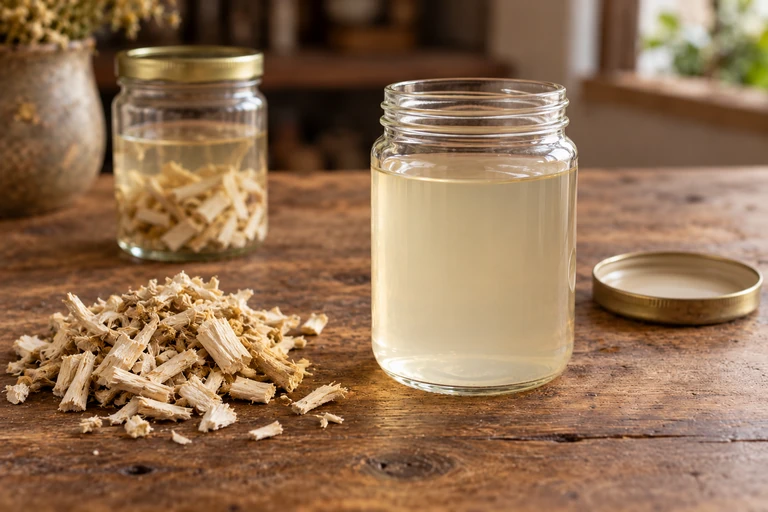
Cold Marshmallow Root Maceration
- Plant part
- root
- Duration
- At least 4 hours, ideally overnight
Ingredients
- 5 to 7 g dried, cut marshmallow root
- 250 ml cold or room-temperature water
Preparation
- Place the root in a clean jar.
- Add the cold or room-temperature water.
- Close the jar and leave to macerate for at least 4 hours, or overnight.
- Stir or gently shake the jar a few times during maceration.
- Strain, gently pressing the root.
- Use the preparation fresh.
Sources and references
- Bondois PM. Une spécialité pharmaceutique au XVIIIe siècle : La pâte de guimauve et réglisse de Gui. Revue d’Histoire de la Pharmacie. 1949;37(123):451–452.
- de la Forêt R. Marshmallow Uses and Plant Profile. LearningHerbs.
- Blumenthal M, et al. The Complete German Commission E Monographs: Therapeutic Guide to Herbal Medicines. American Botanical Council; 1998.