Hops
Other plantsHildegard of Bingen and the Secret of Beer
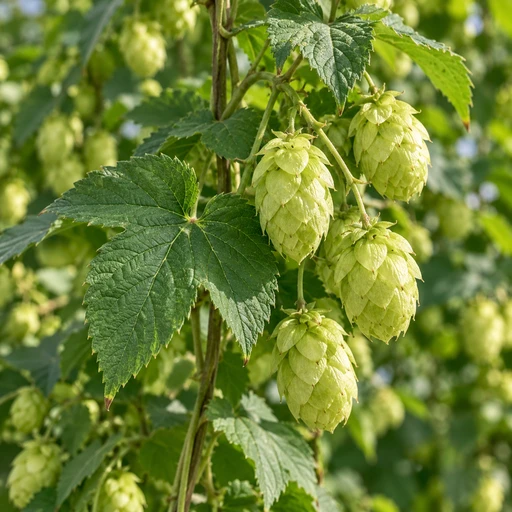
In the twelfth century, Hildegard of Bingen described a benefit of hops in Physica: their bitterness helped beverages keep for longer.
Hops gradually became established in brewing, replacing some of the earlier herbal mixtures known as gruit.
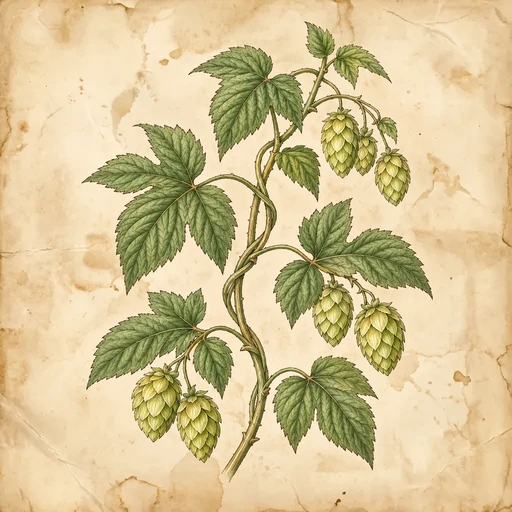
Medicinal properties
Dried female cones
Sedative and sleep aid: traditionally used to help with falling asleep and mild sleep difficulties. Hops are notably combined with valerian in herbal preparations intended to support rest.
Dried female cones
Calming nervine: traditionally used to ease nervousness, restlessness and mild mental tension. Its bitter resins contain constituents being studied for their calming effects on the nervous system.
Dried female cones
Digestive bitter: rich in bitter constituents, notably humulone and lupulone, hops are traditionally used to stimulate appetite and support sluggish digestion.
Recipe
Hops Tincture
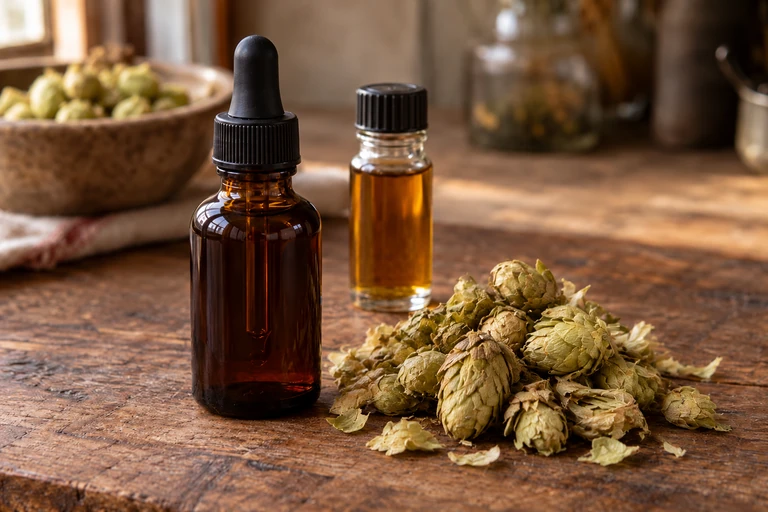
- Plant part
- dried female cones
- Duration
- 14 days of maceration
Ingredients
- 100 g dried female hop cones
- 500 g food-grade vodka at 40% ABV or higher
- One clean, airtight glass jar
- Cheesecloth or a clean cloth for straining
- Amber glass bottles
Preparation
- Use correctly identified, completely dried female hop cones.
- Place the cones in a blender and lightly grind them to reduce their volume and help extract their constituents.
- Place a clean glass jar on a scale, then add 100 g of ground hops.
- Pour 500 g of food-grade vodka at 40% ABV or higher over the plant material.
- Seal the jar tightly, shake vigorously and label it with the plant name, the 1:5 ratio and the date.
- Macerate for 14 days at room temperature in a dark place, shaking the jar daily.
- If the hops absorb too much alcohol and the mixture becomes difficult to shake, add solvent and record the extra quantity used.
- Carefully strain through cheesecloth, pressing the plant material to recover the liquid.
- Pour the tincture into amber glass bottles, label them and store away from light and heat.
Sources and references
- Deirdre Larkin. The Medieval Garden Enclosed—He-Hop, She-Hop. The Metropolitan Museum of Art. October 1, 2009. Hildegard's observations on hops and beverage preservation.
- Caleb Leech. Celebrating Oktoberfest with Medieval Brews. The Metropolitan Museum of Art. September 14, 2017.
- Hildegard of Bingen. Physica, Book I, chapter 61: Hops. English translation by Priscilla Throop, Hildegard von Bingen's Physica. 1998.
- Altmeyers Encyclopedia, Department Phytotherapy. Lupuli flos. Summary of Commission E indications for nervousness, restlessness and sleep disorders.
- Drugs.com. Hops Uses, Benefits & Dosage. Historical sedative and digestive uses, evidence and precautions.
- Carolyn Thomas. Hops Tincture Recipe. Homesteading Family. January 2026. 100 g dried hops, 500 g vodka and 14 days of maceration.