Hawthorn
Other plantsThe May Day Tree
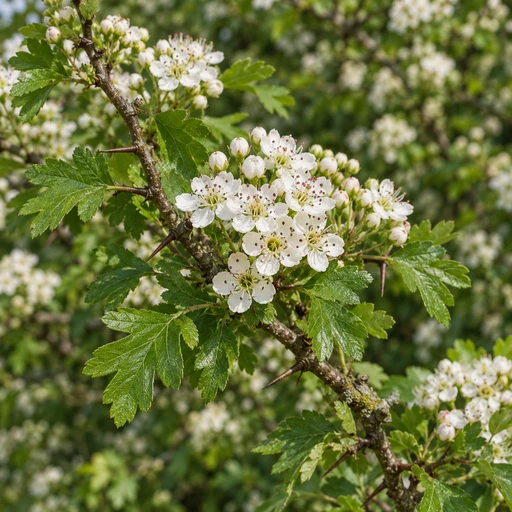
In Ireland, May Day traditionally marked the arrival of summer with the festival of Bealtaine. For the occasion, families sometimes decorated a shrub called the May Bush, often a hawthorn, with colourful ribbons, strips of cloth, painted eggshells and even candles.
Placed outside homes or in a shared community space, this decorated tree symbolised good fortune and protection for the household. In some communities, it was carefully watched because a rival group might try to steal it and take away its associated luck.
Medicinal properties
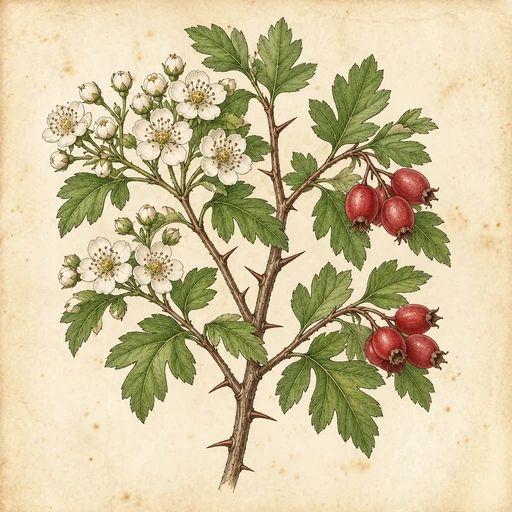
Leaves, flowers and fruits
Cardiovascular support: traditionally used as a cardiovascular tonic, hawthorn is associated with supporting heart function and blood circulation.
Leaves and flowers
Calming nervine: the leaves and flowers are traditionally used to ease nervousness and mild stress, particularly when accompanied by sensations of palpitations. Hawthorn is also used to support rest and sleep.
Recipe
Hawthorn Tincture
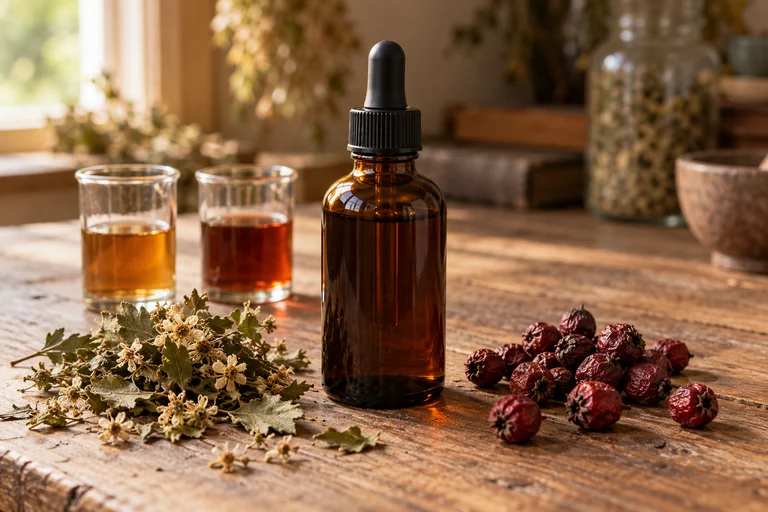
- Plant part
- leaves, flowers and fruits (haws)
- Duration
- 2 to 3 weeks of maceration per tincture, with spring and autumn harvests
Ingredients
- 50 g dried hawthorn leaves and flowers
- 50 g dried ripe hawthorn fruits
- 500 ml food-grade alcohol at 40–50% ABV, divided into two 250 ml portions
- Two clean jars and dark glass bottles to store the separate tinctures and then the blend
Preparation
- In spring, harvest young hawthorn leaves and flowers, then dry them away from sunlight.
- Place 50 g of finely cut dried leaves and flowers in a clean jar and add 250 ml of food-grade alcohol. Keep the plant material fully submerged.
- Close the jar, label it with the plant name and date, then macerate for 2 to 3 weeks away from light, shaking it daily.
- Press and strain the preparation, then store this first tincture in a sealed, labelled bottle.
- In autumn, harvest ripe red fruits and dry them. Prepare a second tincture with 50 g of dried fruits and 250 ml of alcohol using the same method, keeping the stones intact.
- After straining, combine equal volumes of the two tinctures to bring together the spring and autumn preparations.
- Pour the blend into dark glass bottles, label them with the contents and date, then store away from heat and light.
Sources and references
- Clodagh Doyle. Traditions and customs May Day / Bealtaine. National Museum of Ireland. Section: The May Bush.
- Christophe Bernard. Aubépine (Crataegus monogyna) : troubles cardiaques et émotionnels. Althea Provence.
- European Medicines Agency. Crataegi folium cum flore — Hawthorn leaf and flower: summary for the public. EMA/268358/2016.
- Christophe Bernard. Faire une teinture de plantes médicinales : la macération. Althea Provence.
- National Center for Complementary and Integrative Health. Hawthorn: Usefulness and Safety.