Green tea
Other plantsShennong's Leaves
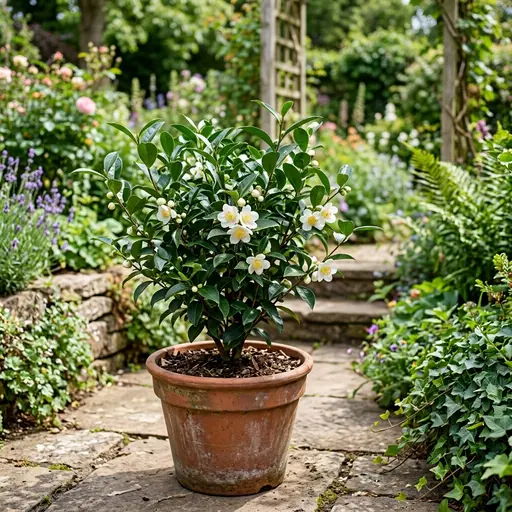
According to a Chinese legend, Emperor Shennong was boiling water beneath a tree when a gust of wind dropped a few leaves into his pot. The water took on a pale colour and a fresh vegetal aroma. Curious, he tasted the infusion and found it refreshing. Tea was thus born, not from a carefully planned recipe, but from an accident. Centuries later, the story remains one of the tea plant's most famous legends.
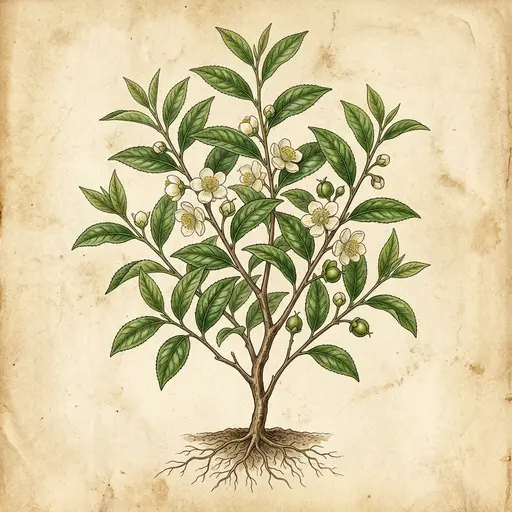
Medicinal properties
Young unfermented leaves
Naturally rich in caffeine, they are traditionally used to help temporarily reduce fatigue and support wakefulness, alertness, and concentration.
Young unfermented leaves
The leaves contain polyphenols, including catechins such as EGCG, which contribute to the antioxidant activity of green tea.
Recipe
Green Tea Infusion
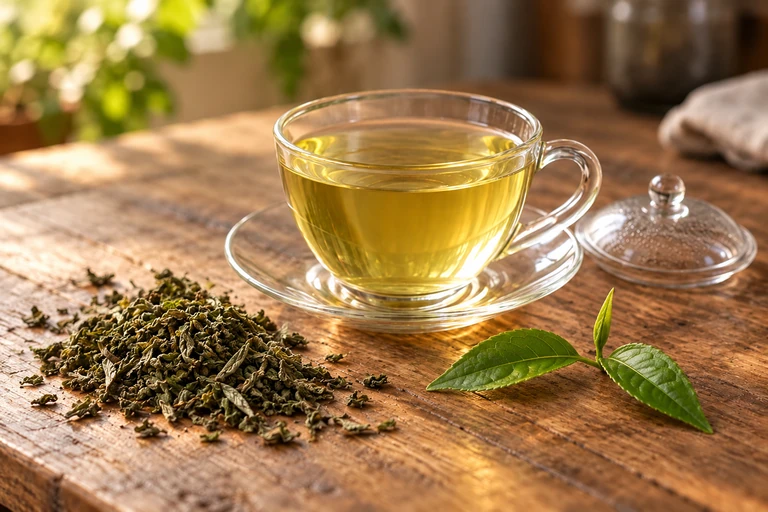
- Plant part
- young unfermented leaves
- Duration
- 2 to 3 minutes
Ingredients
- 2 g green tea leaves
- 250 ml water at approximately 70 to 80°C
Preparation
- Heat the water without bringing it to a boil.
- Place the green tea leaves in a cup or small teapot.
- Pour the hot water over the leaves.
- Steep for 2 to 3 minutes.
- Strain immediately to prevent the infusion from becoming overly bitter and astringent.
Sources and references
- Taes, Sofie. Tea from China. Europeana, KU Leuven / Photoconsortium, 7 September 2021. The legend of Shennong discovering tea when leaves fell into his pot of boiling water; presented as a legend, not an established historical event.
- European Medicines Agency, HMPC. Assessment report on Camellia sinensis (L.) Kuntze, non fermentatum folium. 12 November 2013. EMA/HMPC/283629/2012. Traditional relief of fatigue and weakness; caffeine and alertness; leaf catechins including EGCG and their antioxidant activity. The antioxidant discussion includes laboratory and preclinical findings and is not a separate approved clinical indication.