

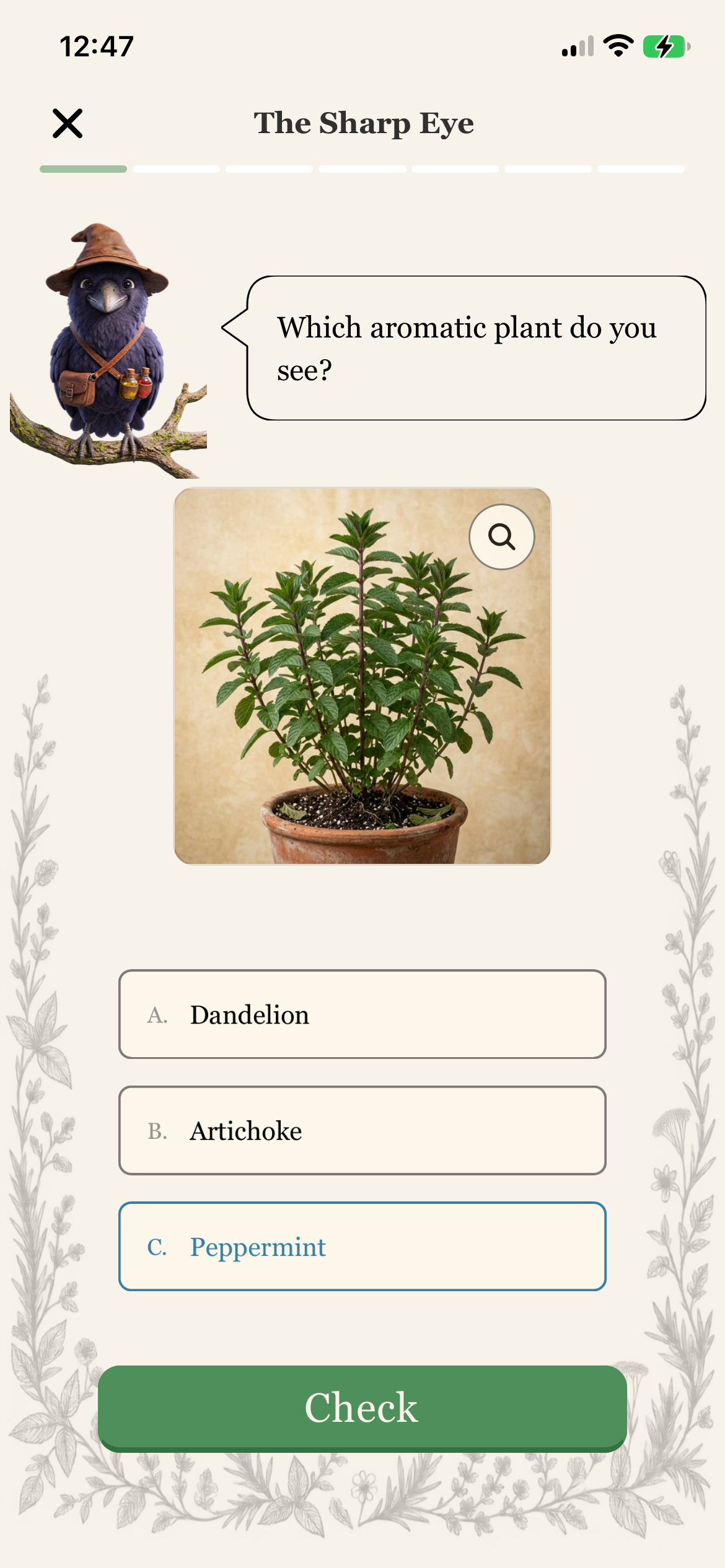
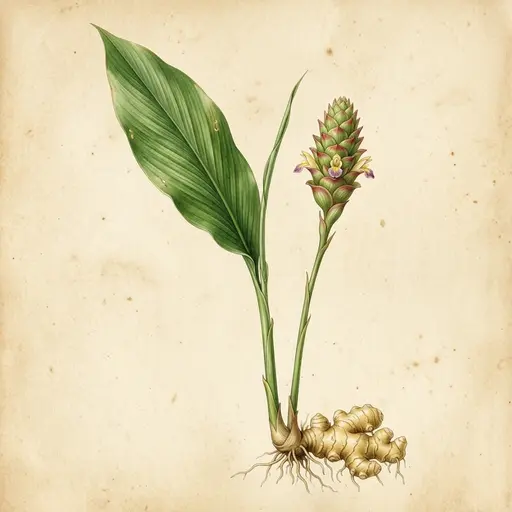
Ginger
Other plantsThe Traveling Rhizome

Ginger is not a root in the strict sense, but a rhizome: a thick, knotted, fragrant underground stem. Its yellow, warm, spicy flesh traveled early along the spice routes, from tropical Asia to European tables and herbals.
In the cup, ginger does not speak through bitterness but through heat. Its sharp taste wakes the mouth, warms the belly, and reminds us that some plants act first through their aromatic and pungent strength. In herbalism, the rhizome is mainly associated with digestive comfort, mild nausea, and winter teas.
Medicinal properties
Rhizome
Traditionally used to support digestive comfort, especially in cases of bloating, gas, slow digestion, mild digestive spasms, or lack of appetite.
Rhizome
Used to help prevent or relieve certain types of nausea, especially nausea related to motion sickness. Its action is mainly associated with the digestive tract.
Rhizome
In traditional use, it also appears in winter teas to accompany chills, mild coughs, and the feeling of cold.
Recipe
Short Ginger Decoction

- Plant part
- rhizome
- Duration
- 10 minutes
Ingredients
- 1 to 2 g dried cut ginger rhizome, or 4 to 5 thin slices of fresh ginger
- 250 ml water
- 1 tsp honey or a squeeze of lemon, optional
Preparation
- Place the ginger in a small saucepan with cold water.
- Bring gently to a simmer.
- Let simmer covered for 10 minutes.
- Remove from heat, then let rest for 2 to 3 minutes.
- Strain, then add honey or lemon once the drink is warm.
Sources and references
- Royal Botanic Gardens, Kew. Species profile: Zingiber officinale Roscoe. Aromatic underground stem, pale yellow rhizome, Asian cultivation and early arrival in Europe through Arab traders.
- EMA/HMPC. Final assessment report on Zingiber officinale Roscoe, rhizoma, Revision 1. EMA/HMPC/765220/2022, final revision published June 19, 2025. Digestive complaints, motion sickness, temporary appetite loss and traditional common cold uses. These additional traditional indications extend beyond the Commission E monograph’s dyspepsia and motion sickness indications.