Elecampane
Other plantsThe Tears of Helen of Troy
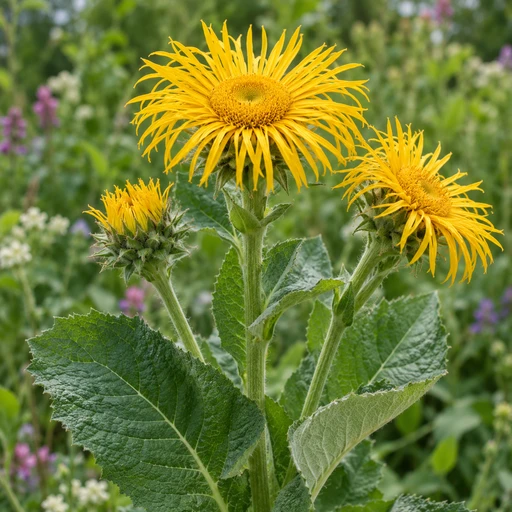
According to an ancient Greek legend, elecampane sprang from the tears of Helen of Troy, whose abduction by Paris sparked one of mythology's most famous wars.
As Helen left her homeland, her tears are said to have fallen to the ground, giving rise to a plant with large yellow flowers. This story travelled through the centuries and became associated with elecampane's name, Inula helenium, which recalls Helen.
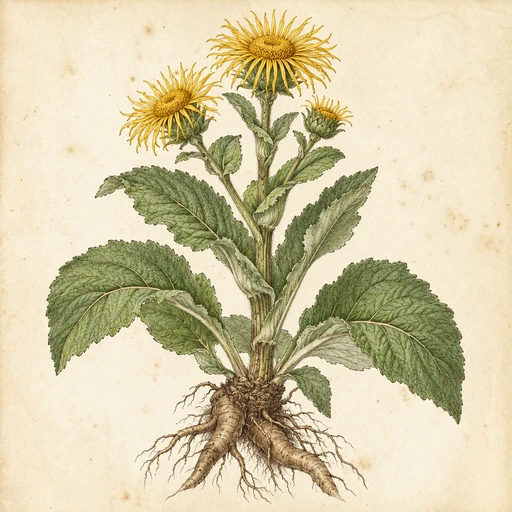
Medicinal properties
Root and rhizome
Stimulating expectorant: traditionally used to help clear bronchial mucus, particularly during productive coughs and respiratory congestion. Elecampane is regarded in herbal practice as a stimulating expectorant.
Root and rhizome
Digestive tonic and carminative: traditionally used to stimulate appetite and support sluggish digestion. Its bitter, aromatic flavour is associated with relieving gas and bloating.
Root
Prebiotic: naturally rich in inulin, a prebiotic fibre that can feed certain bacteria in the intestinal microbiota. This feature distinguishes elecampane from many other medicinal roots.
Recipe
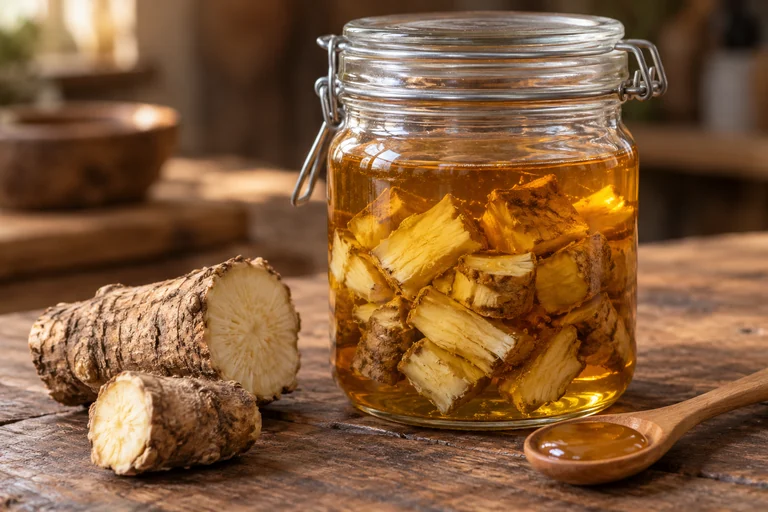
Elecampane Root-Infused Honey
- Plant part
- fresh roots
- Duration
- A few days of maceration
Ingredients
- Correctly identified fresh elecampane roots
- Natural honey, enough to fill the jar
- One clean, completely dry glass jar with an airtight lid
Preparation
- In autumn, dig up a mature elecampane plant and take part of its thickest roots.
- Wash the roots thoroughly in clean water to remove all traces of soil.
- Drain the roots and carefully dry their surfaces with a clean cloth.
- Cut the roots into bite-sized pieces without chopping them too finely.
- Fill about half of a clean jar with the root pieces.
- Pour in honey to fill the jar and completely cover the roots.
- Close the jar and gently turn it over several times a day for a few days to distribute the honey around the pieces.
- After a few days, the honey will have taken on some of elecampane's aromatic, bitter flavour. Keep the jar refrigerated.
Sources and references
- Henry Oakeley. Inula helenium L. Asteraceae. Wellcome Collection. Botanical account quoting William Coles (1657) on Helen of Troy's tears, with notes on inulin and sesquiterpene lactones.
- Botanical Society of Britain and Ireland, Fermanagh Flora. Inula helenium L., Elecampane. Botanical history and traditional uses.
- John Gallagher. Elecampane: A Natural Cough Remedy. LearningHerbs. Includes the original elecampane honey preparation.
- Altmeyers Encyclopedia, Department Phytotherapy. Helenii rhizoma. Summary of traditional uses and the German Commission E negative assessment.
- Nicholas Culpeper. The English Physician. 1652. Historical uses of elecampane.
- William Coles. Adam in Eden. 1657. Historical uses and traditions associated with elecampane; Helen's tears passage quoted in Henry Oakeley's Wellcome Collection account.