Dandelion
Other plantsThe Sign of the Signature
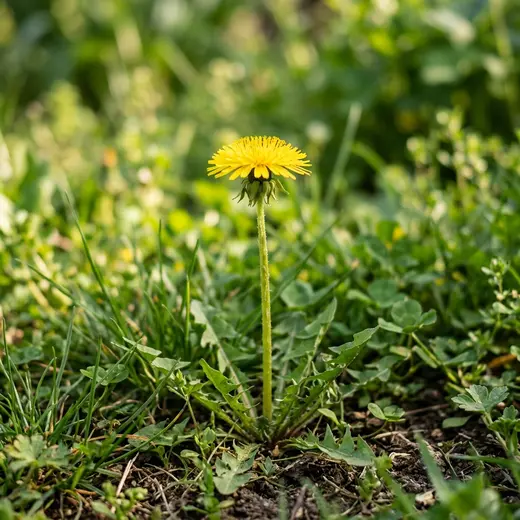
In medieval and Renaissance herbalism, the doctrine of signatures held that a plant's appearance revealed its virtues. With its yellow flower and strong bitter taste, dandelion was long associated with the liver and bile in herbal traditions. Today, its root is still described in phytotherapy as a bitter plant that supports digestion.
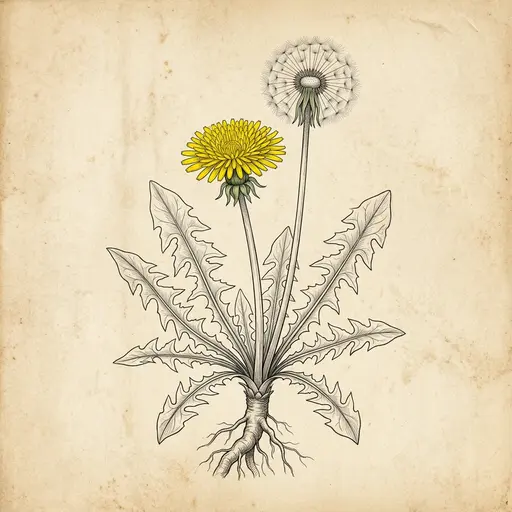
Medicinal properties
Root
Its bitter root is traditionally associated with digestive support.
Leaves
Its leaves are traditionally known in herbalism for their diuretic effect and potassium content.
Flowers
Its flowers are edible and excellent raw in a salad.
Recipe
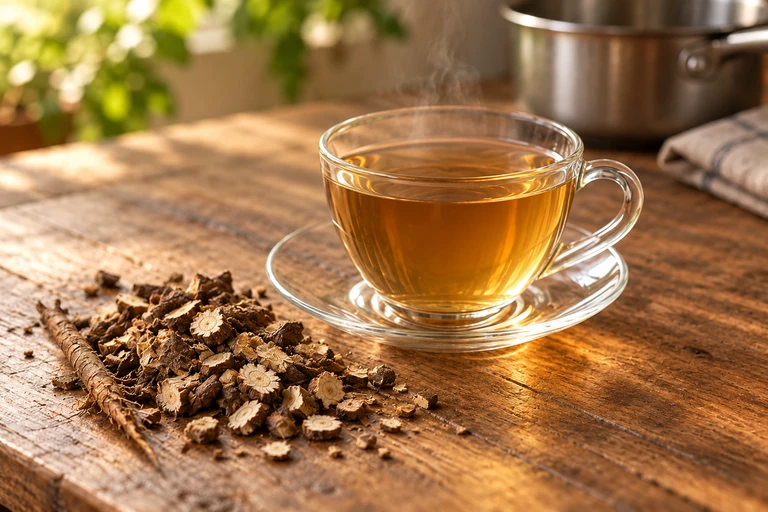
Dandelion Root Decoction
- Plant part
- root
- Duration
- 10 to 15 minutes
Ingredients
- 3 g dried dandelion root
- 250 ml water
Preparation
- Place the root in cold water.
- Bring to a gentle simmer, then let it simmer for 10 to 15 minutes.
- Strain, then taste the bitterness slowly.
Sources and references
- Small, Ernest. Culinary Herbs. NRC Research Press, Ottawa, 1997. Taraxacum chapter, pp. 599–604, especially pp. 601 and 603: historical doctrine-of-signatures association of yellow flowers with liver ailments, bitter constituents, potassium-rich greens and flowers eaten raw. Also introductory treatment of edible flowers, pp. 12–14. Food and historical reference, distinct from the medicinal monograph.
- Health Canada. Dandelion — Taraxacum officinale. 25 July 2025, Use(s) or Purpose(s), p. 2. Separate traditional indications for root and leaf: root for digestive troubles; leaf as a diuretic and for urinary flushing. Does not establish flower edibility or potassium content, documented separately by Small.