Clove Tree
Other plantsA Tree for a Birth
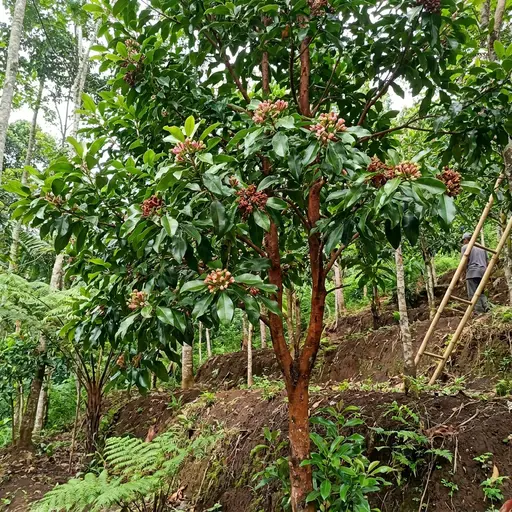
In the Maluku Islands of Indonesia, the historic home of the clove tree, an old tradition called for a tree to be planted when a child was born. The clove tree’s growth was symbolically linked to the child’s.
In the seventeenth century, when the Dutch East India Company sought to control the clove trade, many clove trees outside the areas it controlled were destroyed to restrict production and keep prices high. A tree once associated with birth and family thus became one of the great stakes in the global spice trade.
Medicinal properties
Flower buds
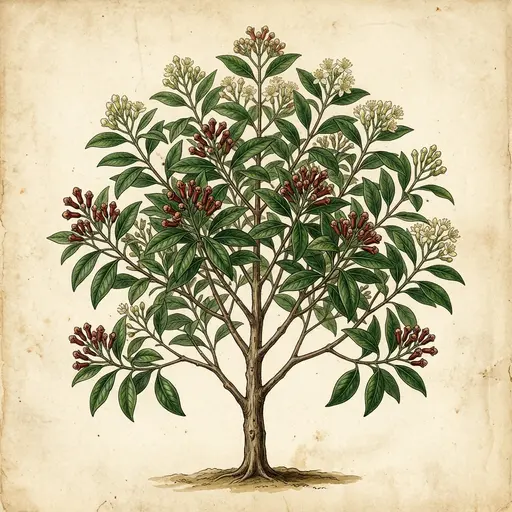
A clove is actually the dried flower bud of the clove tree (Syzygium aromaticum). It contains an essential oil particularly rich in eugenol, a compound responsible for much of its characteristic aroma and mild anaesthetic effect. Clove oil is traditionally used for the temporary relief of toothache and minor inflammation of the mouth.
Flower buds
Clove also has a long tradition of digestive use. The flower buds have notably been used as a decoction for digestive discomfort and flatulence, reflecting their traditional use as an aromatic carminative herb.
Recipe
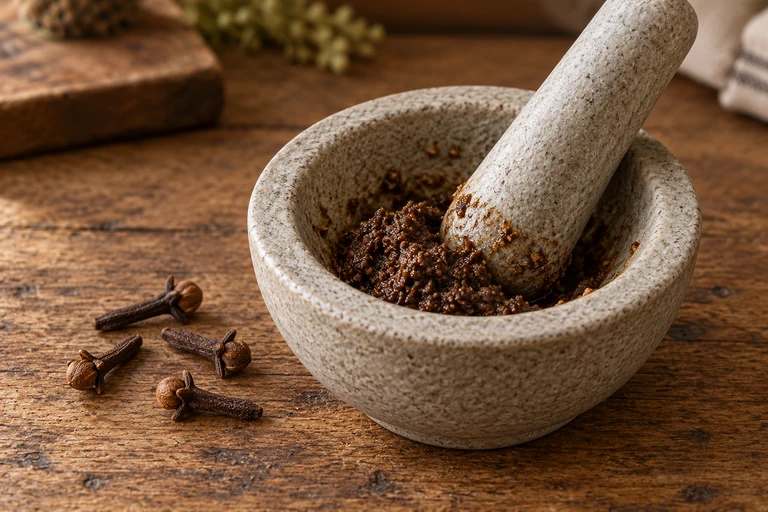
Clove Paste
- Plant part
- flower buds
- Duration
- use immediately
Ingredients
- 3 to 5 dried cloves
- A few drops of water
Preparation
- Grind the cloves into a fine powder using a mortar.
- Add a few drops of water, just enough to make a thick paste.
- Apply a small amount of the paste locally near the painful tooth.
- Prepare the paste immediately before use and do not store it.
Sources and references
- Princeton University Library. Spice Islands Historic Maps – Cloves. The collection describes the Malukan tradition of planting a clove tree at a child’s birth and the impact of the Dutch monopoly on clove plantations.
- World Health Organization. WHO Monographs on Selected Medicinal Plants, Volume 2 – Flos Caryophylli. The monograph defines cloves as the dried flower buds of Syzygium aromaticum and describes their traditional oral and dental uses.
- European Medicines Agency. Syzygium aromaticum – Caryophylli floris aetheroleum. The EMA recognises the traditional use of clove oil for disorders of the mouth and temporary relief of toothache.
- Batiha GE-S, et al. Syzygium aromaticum L. (Myrtaceae): Traditional Uses, Bioactive Chemical Constituents, Pharmacological and Toxicological Activities. Biomolecules. 2020;10(2):202. doi:10.3390/biom10020202.
- Agbor MA, Naidoo S. Ethnomedicinal Plants Used by Traditional Healers to Treat Oral Health Problems in Cameroon. Evidence-Based Complementary and Alternative Medicine. 2015;2015:649832. doi:10.1155/2015/649832.