
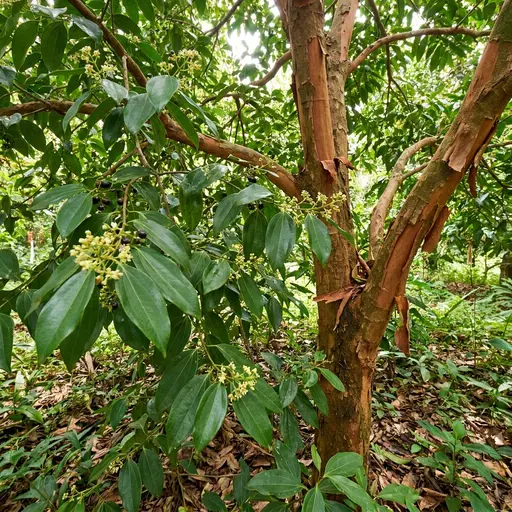
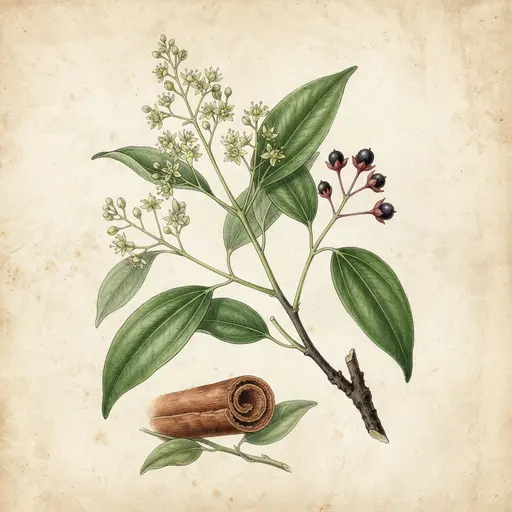
Cinnamon
Other plantsMoses’ Sacred Oil
In the Book of Exodus, God commands Moses to prepare a fragrant oil to consecrate the Ark, the altars and the priests.
The recipe combines olive oil with several precious aromatics: myrrh, cinnamon, aromatic cane and cassia.
The formula itself was considered sacred: the text forbids making a copy for ordinary use.
Medicinal properties
Bark
Cinnamon is traditionally used as a digestive and carminative herb. Its warm, aromatic flavor is notably associated with gas, bloating and digestive cramps. Contemporary herbalists continue to use it in this context.
Bark
Cinnamon is also studied for its influence on blood sugar and glucose metabolism. Several clinical trials have observed effects on glycemic control, but results vary according to the cinnamon species, preparation and populations studied.
Recipe
Cinnamon Decoction

- Plant part
- bark
- Duration
- 15 minutes
Ingredients
- 1 to 2 Ceylon cinnamon sticks
- 500 ml water
Preparation
- Coarsely break the cinnamon sticks.
- Place the cinnamon in a saucepan with 500 ml of water.
- Bring to a boil, then reduce the heat.
- Cover and simmer gently for 10 to 15 minutes.
- Strain and drink the decoction warm.
Sources and references
- Exodus 30:23–33. Torah / Hebrew Bible.
- de la Forêt R. Cinnamon Uses and Plant Profile. LearningHerbs.
- Ranasinghe P, et al. Medicinal properties of ‘true’ cinnamon (Cinnamomum zeylanicum): a systematic review. BMC Complementary and Alternative Medicine. 2013;13:275. doi:10.1186/1472-6882-13-275.
- Dugoua JJ, et al. From type 2 diabetes to antioxidant activity: a systematic review of the safety and efficacy of common and cassia cinnamon bark. Canadian Journal of Physiology and Pharmacology. 2007;85(9):837–847.