Bogbean
Other plantsThe Hop of the Bogs
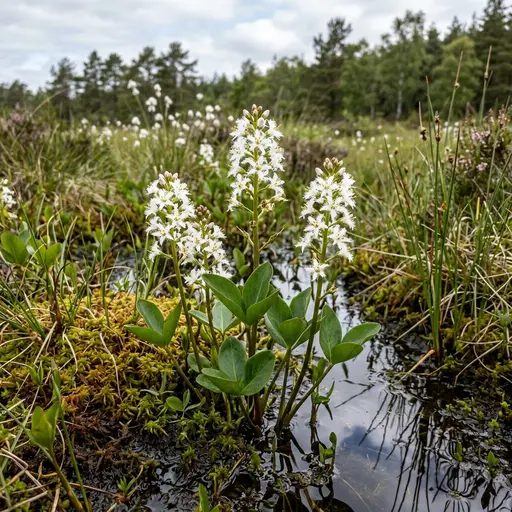
In the nineteenth century, the British Flora Medica reported that peasants in Västergötland, Sweden, sometimes replaced hops with the intensely bitter leaves of bogbean. They gave beer a distinctive flavour and helped keep it from turning sour. This marsh plant, with its fringed white flowers, thus travelled from bog to barrel. Its bitterness was so powerful that a small amount was enough to mark an entire brew.
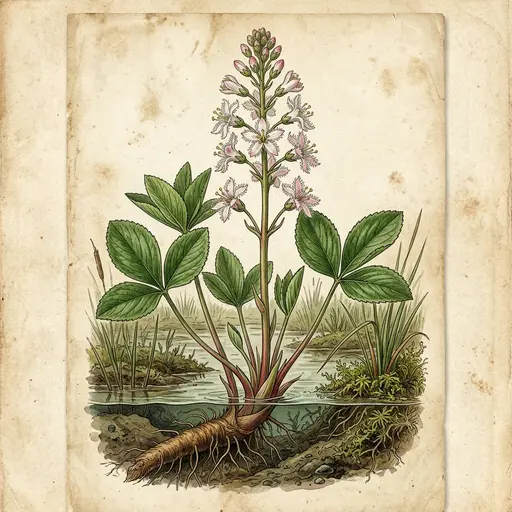
Medicinal properties
Dried leaves
Traditionally used as a bitter herb to accompany temporary loss of appetite. For this use, preparations are generally taken before meals.
Dried leaves
Traditionally used to relieve mild digestive disorders, especially bloating and flatulence.
Leaves and leaf preparations
Some preparations are also traditionally used to help relieve minor articular and muscular pain.
Recipe
Bitter Bogbean Decoction
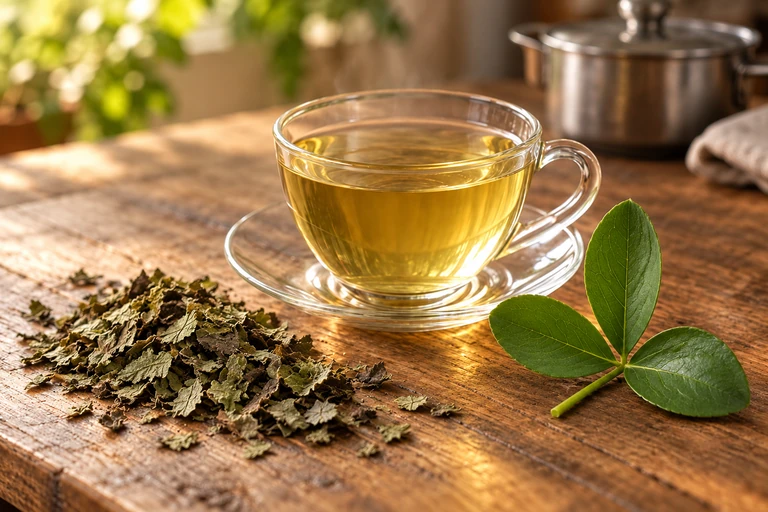
- Plant part
- dried leaves
- Duration
- 15 minutes
Ingredients
- 0.5 to 1.5 g dried, cut bogbean leaves
- 150 ml water
Preparation
- Place the dried leaves in a small saucepan with the cold water.
- Bring quickly to a boil.
- Cover and simmer gently for 5 minutes.
- Remove from the heat and let rest for another 10 minutes, covered.
- Strain carefully. The intensely bitter taste is characteristic of this preparation.
Sources and references
- Barton, Benjamin Herbert; Castle, Thomas. The British Flora Medica; or, History of the Medicinal Plants of Great Britain. Vol. 1, London: E. Cox, 1838 (Internet Archive catalogue date). Buckbean entry: peasants of Westrogothia using bitter leaves instead of hops to flavour beer and prevent souring; a small quantity of dried leaves replacing a much larger quantity of hops.
- European Medicines Agency, HMPC. European Union herbal monograph on Menyanthes trifoliata L., folium. 5 May 2021. EMA/HMPC/637833/2018. Traditional relief of temporary loss of appetite, mild digestive disorders such as bloating and flatulence, and minor articular and muscular pain.