Bilberry
Other plantsBilberry Sunday
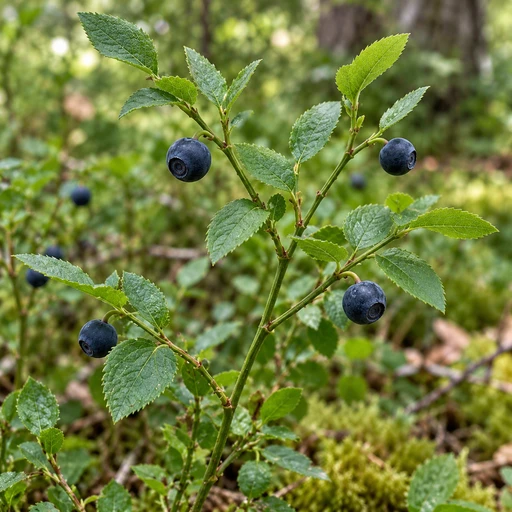
In Ireland, between late July and early August, the festivities of Lughnasa marked the arrival of the harvest. In some areas, they were called Bilberry Sunday, reflecting the importance of gathering these small berries.
People climbed the hills to pick wild bilberries, share them and enjoy games and festivities. Berries were also brought home to older people or those too frail to make the climb, so they could take part in this celebration of abundance.
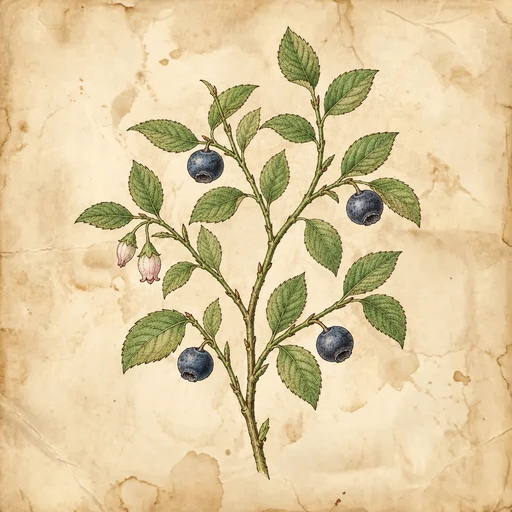
Medicinal properties
Dried ripe fruits
Digestive astringent: rich in tannins, dried bilberries are traditionally used to relieve mild, temporary diarrhoea. Their astringent action helps limit intestinal secretions.
Ripe fruits
Microcirculation support: rich in anthocyanins, bilberries are associated with supporting venous circulation and small blood vessels. Their extracts are being studied particularly for heavy legs and capillary fragility, although clinical evidence remains limited.
Dried ripe fruits
Oral astringent: traditionally prepared as a decoction for mouth rinses and gargles, dried bilberries are associated with relieving minor mouth and throat irritation because of their high tannin content.
Recipe
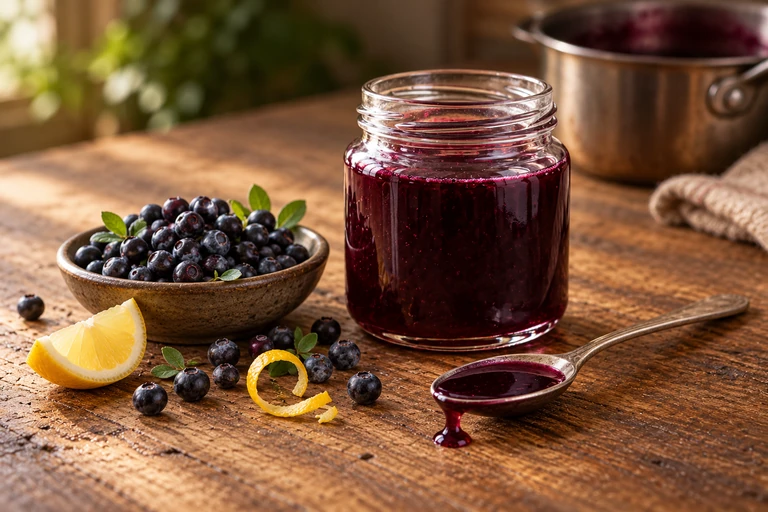
Wild Bilberry Syrup
- Plant part
- fresh or frozen ripe fruits
- Duration
- About 10 to 15 minutes
Ingredients
- 200 ml fresh or frozen wild bilberries
- 100 ml light sugar syrup
- Zest of one lemon
- 2 tablespoons lemon juice
- 1 tablespoon corn starch
- One small saucepan and a clean container
Preparation
- Use ripe, correctly identified wild bilberries. Rinse them gently if fresh.
- Place the bilberries in a small saucepan with the 100 ml of sugar syrup.
- Zest one lemon and add the zest to the fruit.
- Gently heat the mixture over medium heat until the bilberries begin releasing their juice.
- In a small bowl, mix the corn starch with the two tablespoons of lemon juice until smooth.
- Pour this mixture into the saucepan, stirring continuously to prevent lumps.
- Reduce the heat and simmer for a few minutes until the syrup thickens and turns dark purple.
- Remove from the heat and pour into a clean container. Serve warm or cold, particularly over pancakes, porridge or desserts.
Sources and references
- Regina Sexton. It's Bilberry Sunday this weekend but have you ever eaten one? RTÉ Brainstorm / University College Cork. July 25, 2025. Irish Lughnasa festivities and bilberry gathering.
- Máire MacNeill. The Festival of Lughnasa: A Study of the Survival of the Celtic Festival of the Beginning of the Harvest. 1962. Bilberry traditions discussed in Regina Sexton's RTÉ article.
- German Commission E. Myrtilli fructus — dried bilberry fruit. Traditional digestive and oral astringent uses.
- Bilberry (Vaccinium myrtillus L.). Chapter 4 in Herbal Medicine: Biomolecular and Clinical Aspects, second edition. 2011. NCBI Bookshelf.
- European Medicines Agency. Myrtilli fructus siccus — dried bilberry fruit. Traditional uses for mild diarrhoea and minor oral mucosal inflammation.
- European Medicines Agency. Myrtilli fructus recens — fresh bilberry fruit and anthocyanin-rich extract preparations. Traditional use for minor venous circulatory disturbances and capillary fragility.
- Arctic Bilberry. Bilberry syrup. Original Finnish recipe with bilberries, light syrup, lemon and corn starch.