Mountain Arnica
Other plantsThe Herb of Falls and Harvests
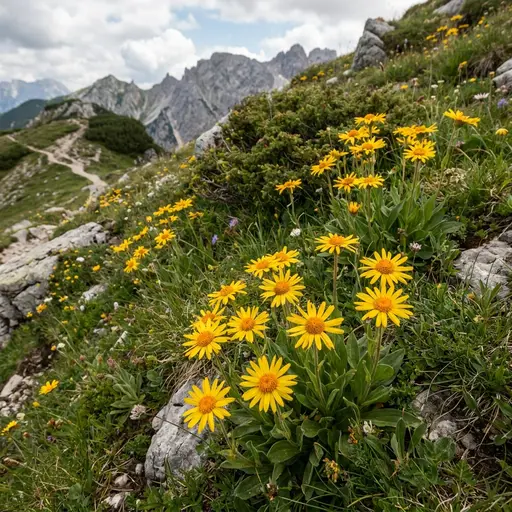
In German-speaking folk traditions, some of its old names — Donnerwurz, Wolfsbanner, Johannisblume — placed it among the powerful plants of the solstice, gathered around St John's Day, when the sun stood at its height.
Flowers picked on that day were said to carry a special strength. In some rural customs, arnica bouquets were even fastened to the corners of grain fields to protect the harvest from spirits that laid the stalks flat. Then another name became the most remembered: Fallkraut, the herb of falls. The orange-yellow flower heads moved from field rituals into jars of oil, balms, and household ointments in mountain families.
Medicinal properties
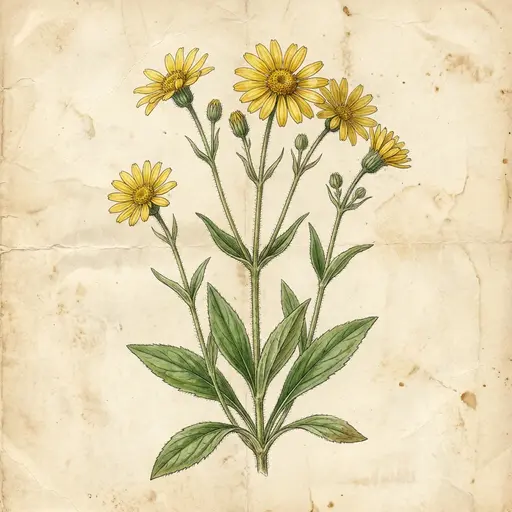
Flower heads
Traditionally used externally, arnica flower heads are infused in oil or prepared as a balm, ointment, or diluted tincture to support bruises, bumps, contusions, mild sprains, and sore muscles.
Recipe
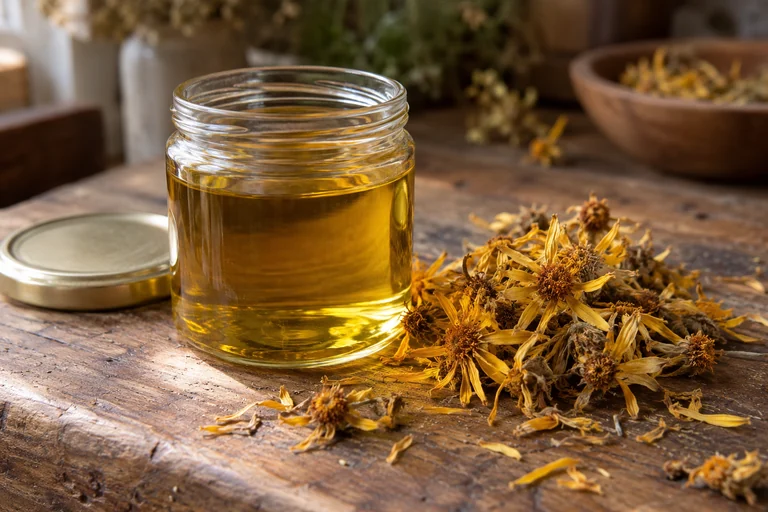
Mountain Arnica Oil
- Plant part
- flower heads
- Duration
- 3 weeks
Ingredients
- 20 g dried arnica flower heads
- 200 ml olive oil or sunflower oil
Preparation
- Place the thoroughly dried arnica flower heads in a clean, completely dry jar.
- Pour the oil over the flowers until they are completely covered.
- Seal the jar and let it infuse for 3 weeks in a warm, bright place, away from excessive heat.
- Gently shake the jar each day and make sure the flowers remain under the oil.
- Strain through cheesecloth or a clean cloth, then gently press the flowers to recover the oil.
- Pour the strained oil into a clean, dry, labelled bottle. Store it away from light and heat.
Sources and references
- Ritter S. Arnika (Arnica montana). Legenden und Historisches rund um die Arnika. Folk names, St John's Day traditions and field protection customs.
- Commission E (Allemagne). Arnica flower (Arnicae flos). Bundesanzeiger, 5 décembre 1984. Traduction anglaise de la monographie reproduite par The Family Doctor.
- Louis Herboristerie. Arnica Montana de Louis herboristerie. July 6, 2021. History and oil maceration: 20 g flowers in 200 ml vegetable oil for 3 weeks, with daily shaking and filtration.