Yarrow
Other plantsThe Herb of Achilles
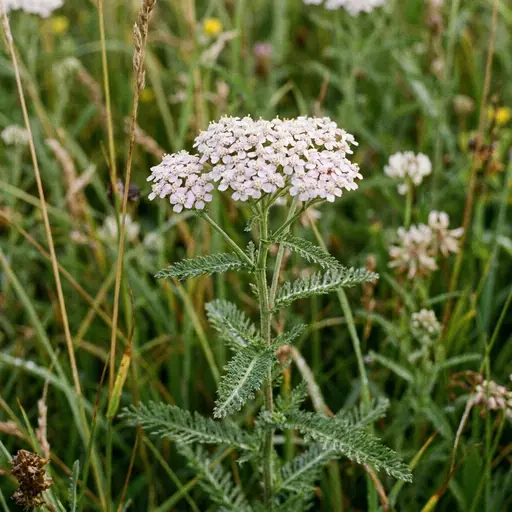
Yarrow owes its name to the Greek hero Achilles, who tradition says used the plant for soldiers' wounds. In meadows, it is recognized by its very finely divided leaves, as if cut into a thousand fragments, and by its flat clusters of tiny white or pinkish flowers.
In European herbalism, the flowering tops are mainly gathered to make an infused oil or ointment, traditionally applied to the skin. A discreet plant, but a very present one in old herbals of external care.
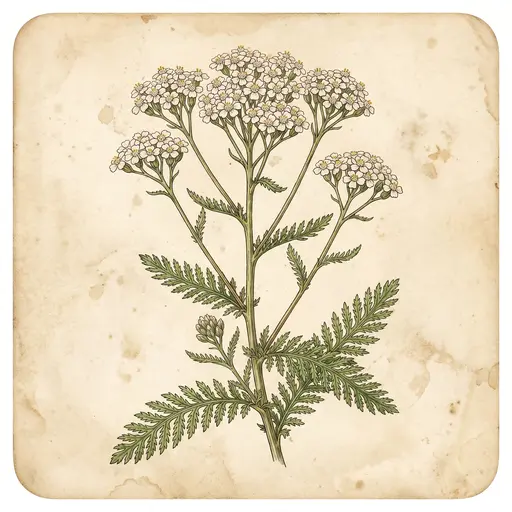
Medicinal properties
Flowering tops for external use
Traditionally infused in oil or made into an ointment, applied to minor irritations, superficial wounds, or uncomfortable areas of the skin, after the area has been cleaned.
Flowering tops
For internal use, traditionally used to support digestion and accompany minor spasms linked to menstrual periods, in adults and adolescents over 12 years old.
Recipe
Yarrow Ointment
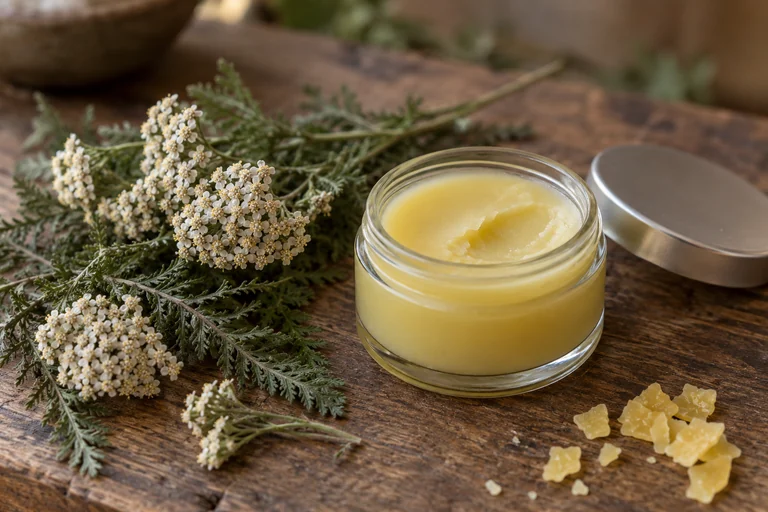
- Plant part
- flowering tops
- Duration
- 3 weeks maceration + preparation
Ingredients
- Dried yarrow, enough to fill a jar
- Sweet almond oil, enough to cover the plant
- Beeswax, about 10 to 15 g per 100 ml of infused oil
Preparation
- Place the dried yarrow in a clean, dry glass jar.
- Fully cover the plant with sweet almond oil.
- Close the jar and let it macerate for 3 weeks away from light, stirring occasionally.
- Strain the oil through cheesecloth or a clean cloth.
- Gently warm the infused oil with the beeswax in a double boiler until fully dissolved.
- Pour the still-warm mixture into clean, dry jars, then let it set.
Sources and references
- Grieve M. A Modern Herbal: Yarrow. 1931. Historical account of the Achilles tradition, plant description and Scottish ointments.
- European Medicines Agency, HMPC. Assessment report on Achillea millefolium L., herba. Revision 1. EMA/HMPC/376415/2019, adopted 23 September 2020. Traditional indications and clinical data on cutaneous preparations.
- Adamant A. Yarrow Salve Recipe (For Cuts, Burns & Skin Irritation). Practical Self Reliance. Updated May 14, 2026. Cold infusion of dried yarrow, carrier oils, straining and combining with beeswax.