Witch hazel
Other plantsThe Dowser's Branch
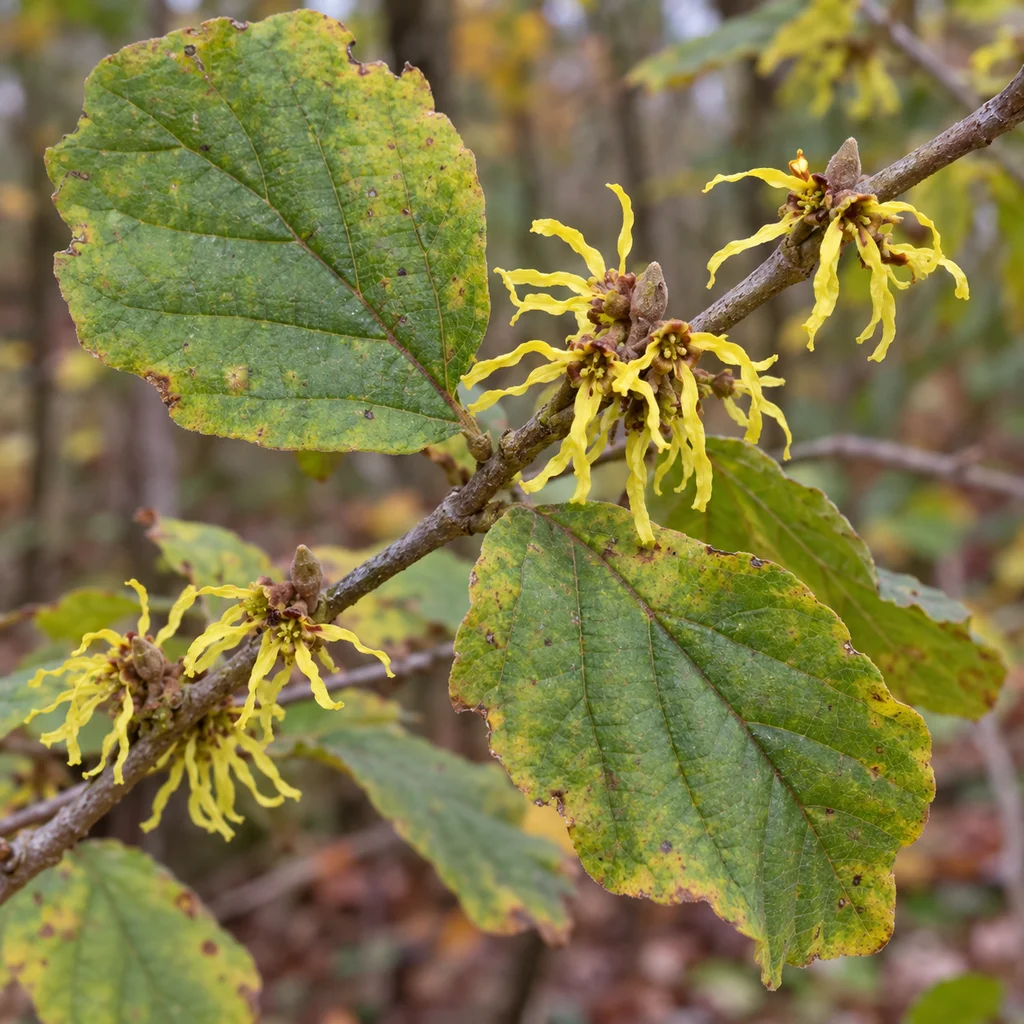
In colonial America, dowsers often chose a forked witch-hazel branch to search for hidden springs. Holding it by its two arms, they believed it would dip above water or a vein of ore. The English name witch hazel may not refer directly to witches at all: witch is thought to come from the old word wice, linked to something that bends or becomes “lively,” like the flexible twig in the dowser's hands.
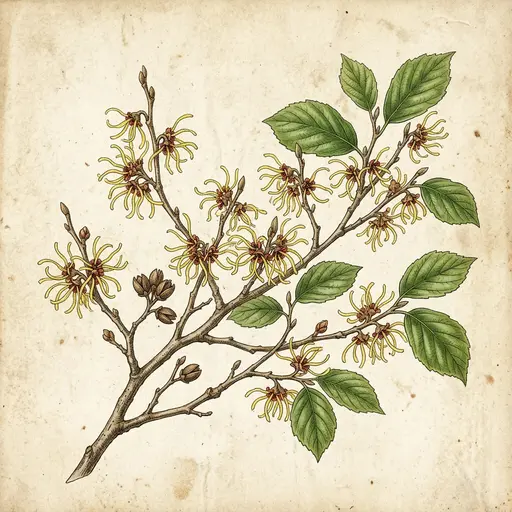
Medicinal properties
Bark and leaves
Traditionally used externally as astringents in preparations intended for varicose veins.
Witch hazel water from dormant twigs
Traditionally used as an astringent to accompany minor wounds, burns, bruises, irritations, and local skin inflammations.
Witch hazel water
Traditionally used externally to help relieve hemorrhoids.
Recipe
Traditional Witch Hazel Compress
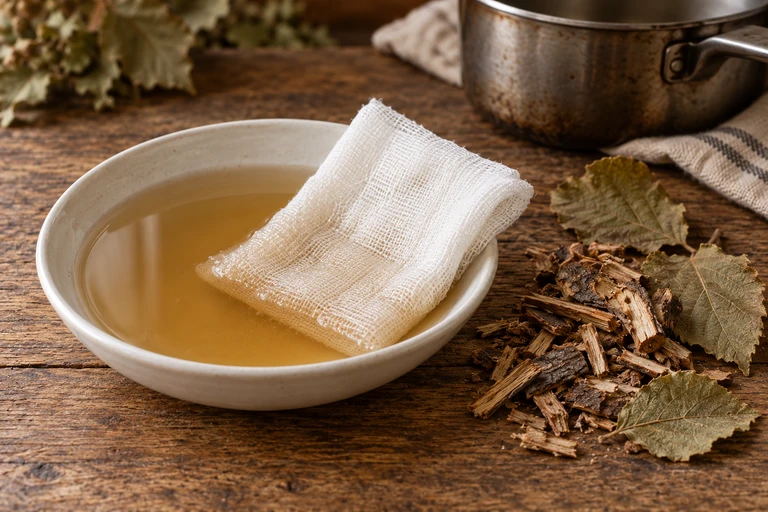
- Plant part
- dried bark and/or leaves
- Duration
- 10 to 15 minutes of simmering
Ingredients
- 5 to 10 g dried, cut witch hazel bark and/or leaves
- 250 ml water
- A small clean towel, compress, or piece of gauze
Preparation
- Place the bark or leaves in a small saucepan with 250 ml of water.
- Bring to a boil, then simmer gently for 10 to 15 minutes.
- Remove from the heat and let cool completely to a temperature comfortable for the skin.
- Strain the decoction carefully.
- Soak the towel, compress, or gauze in the preparation, then wring it out lightly.
- Apply the compress to the affected area without rubbing. Prepare a fresh decoction for each session and discard the remainder after use.
Sources and references
- Stritch, Larry. American Witchhazel (Hamamelis virginiana L.). USDA Forest Service, Plant of the Week. Colonial use of forked witch-hazel branches for dowsing and the lively/bending etymology of the English name.
- Health Canada. Witch Hazel — Hamamelis virginiana — Topical, 27 February 2026, recommended uses and medicinal ingredients. Bark and leaves for varicose veins; water distilled from dormant twigs for minor wounds, burns, bruises, irritation, inflammation and hemorrhoids. Reference attached to medicinal effects only.
- Vita Library. Witch hazel bark, skin benefits, hemorrhoids relief, how to use, and risks. 2 January 2026. How much to use and how often — For bark or leaf decoction compress (home preparation): 5–10 g dried bark or leaf in 250 ml water, bring to a boil, simmer 10–15 minutes, let cool, soak clean gauze or cloth and apply as a compress. Popular preparation reference; medicinal effects are referenced separately to Health Canada.