Tea tree
Other plantsThe Bush Stills
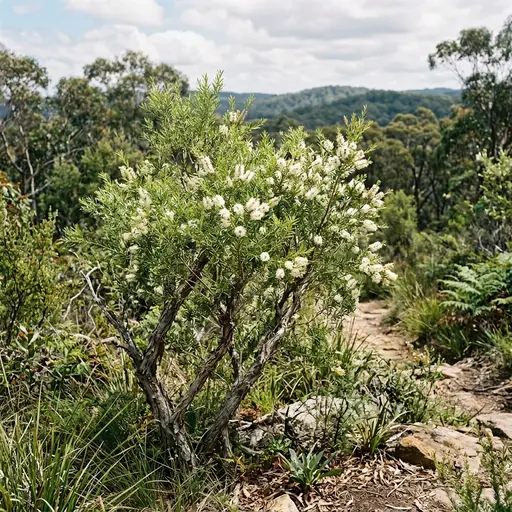
In the 1920s, Australian chemist Arthur Penfold studied the essential oils of native plants. His work drew attention to Melaleuca alternifolia oil and helped launch a small industry in the swamps of northern New South Wales. Branches were cut by hand, then distilled on site in mobile wood-fired stills. Before modern plantations, tea tree oil was therefore born in the heart of the Australian bush.
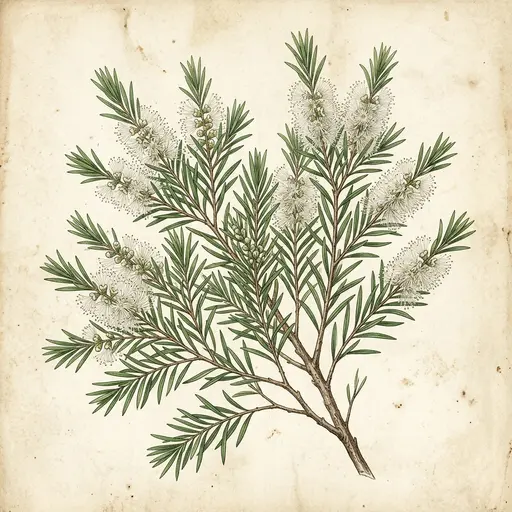
Medicinal properties
Essential oil from leaves and leafy twigs
Traditionally used topically to support the care of small superficial wounds and insect bites.
Essential oil from leaves and leafy twigs
Some diluted preparations are traditionally used for small boils and mild acne.
Essential oil from leaves and leafy twigs
Traditionally used to relieve itching and irritation associated with mild athlete’s foot, without replacing treatment when the infection persists.
Recipe
Tea Tree Leaf Poultice
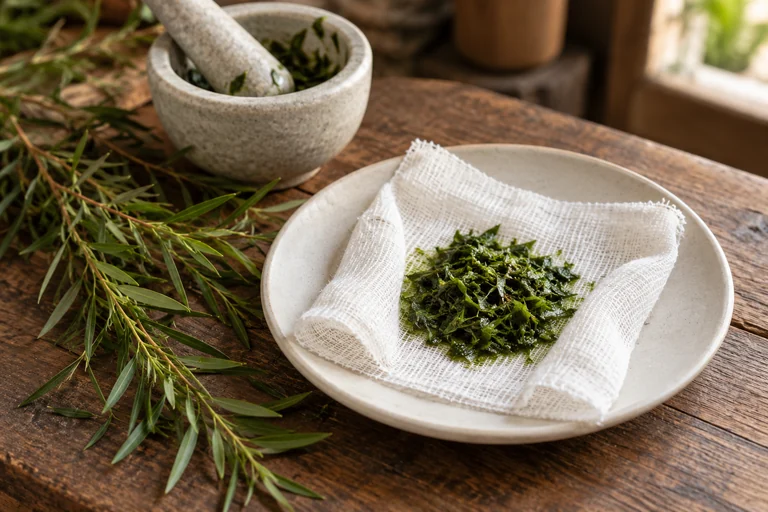
- Plant part
- fresh leaves
Ingredients
- A small handful of correctly identified fresh tea tree leaves
- A little hot water
- A clean compress or cloth
Preparation
- Rinse the leaves thoroughly with clean water.
- Bruise and crush the leaves until they begin to release their aromatic juices.
- Add a few drops of hot water to create a moist plant mixture.
- Place the crushed leaves on a clean compress or cloth.
- Apply the poultice to the affected area.
- Remove the poultice, then gently rinse the skin with clean water.
Sources and references
- Carson CF, Hammer KA, Riley TV. Melaleuca alternifolia (Tea Tree) Oil: a Review of Antimicrobial and Other Medicinal Properties. Clinical Microbiology Reviews. 2006;19(1):50-62. Commercial production and historical leaf use, p. 52; no leaf-poultice application duration specified.
- European Medicines Agency, Committee on Herbal Medicinal Products. Melaleucae aetheroleum - Tea-tree oil herbal medicinal product summary.