Horsetail
Other plantsThe Survivor of the Carboniferous
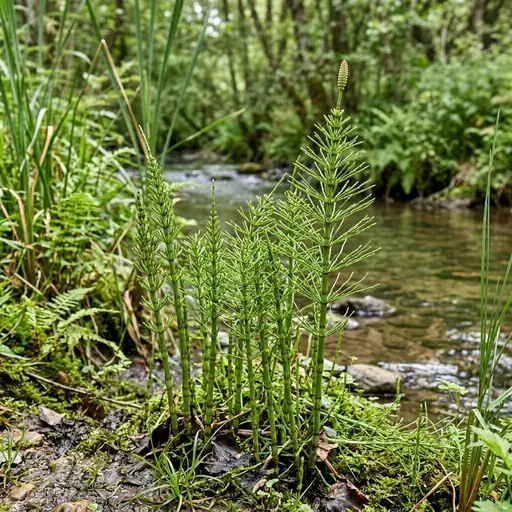
Long before the dinosaurs, during the Carboniferous, giant relatives of horsetail formed swampy forests. Their hollow stems rose like tree trunks, and some of this buried vegetation contributed to the coal seams mined today. The small field horsetail, which reproduces by spores rather than seeds, still carries their jointed silhouette. Growing beside a ditch, it looks like a prehistoric forest reduced to the scale of a human hand.
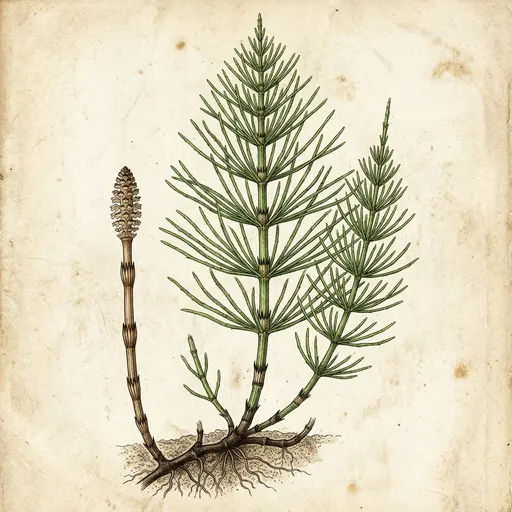
Medicinal properties
Sterile aerial parts
Traditionally used as a mild diuretic to increase urine production and help flush the urinary tract during minor urinary discomfort.
Sterile aerial parts for external use
As an infusion or decoction, they are traditionally applied as a compress to support the care of small superficial wounds.
Recipe
Horsetail Infusion
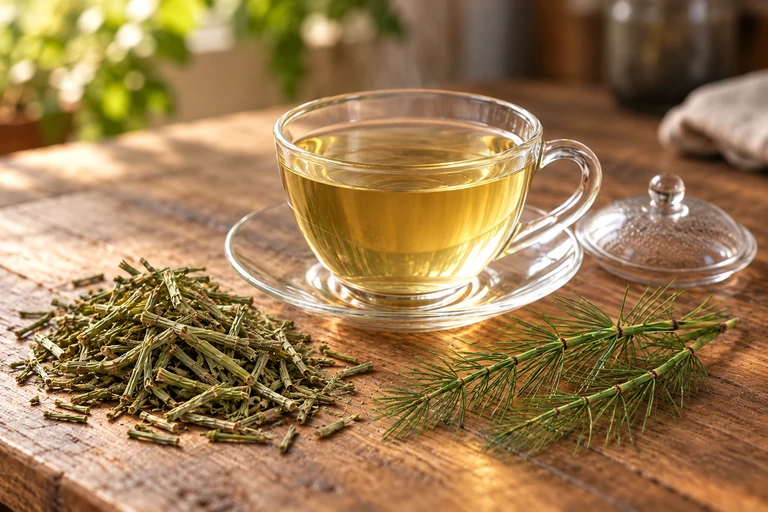
- Plant part
- sterile aerial parts
- Duration
- 10 minutes
Ingredients
- 2 to 3 g dried, cut sterile aerial parts of field horsetail
- 250 ml water
Preparation
- Place the dried horsetail in a cup or small teapot.
- Pour simmering water over the herb.
- Cover and steep for 10 minutes.
- Strain carefully before drinking.
- During this use, make sure to drink enough water throughout the day.
Sources and references
- Askham, Beth. Prehistoric plants: How to grow a dinosaur garden. Natural History Museum, London. Plants of the Carboniferous Period: giant horsetail relatives in swamp forests before dinosaurs, hollow trunks, coal deposits and smaller surviving relatives.
- German Commission E. Horsetail herb (Equiseti herba). Published 18 September 1986. Fresh or dried green sterile stems of Equisetum arvense: mild diuretic action and urinary irrigation; external supportive treatment of poorly healing wounds. English monograph transcription. Reference attached to medicinal effects, not the infusion recipe.