Eucalyptus
Other plantsThe Tree That Was Meant to Build the Railways
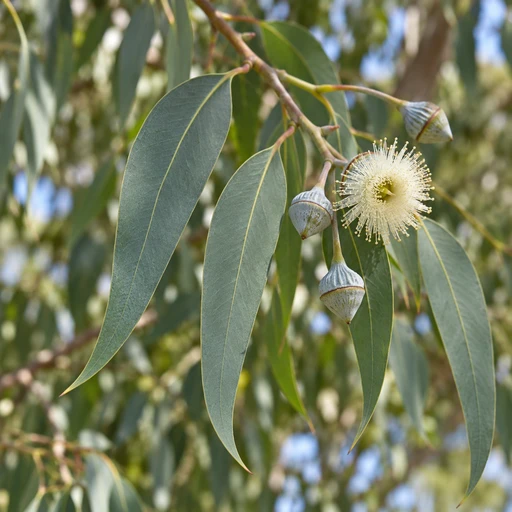
In 1853, Captain Robert Waterman introduced eucalyptus trees from Australia to California during the Gold Rush.
These trees grew so quickly that entrepreneurs planned to cultivate them for timber to build houses and railways. Vast plantations appeared, with the hope of rapidly producing railway sleepers.
But the wood of young eucalyptus trees held an unpleasant surprise: it tended to split and warp as it dried. Once dry, it also became extremely hard to work.
Many commercial projects were abandoned, but the trees remained. California's tall eucalyptus trees still bear witness to this nineteenth-century industrial venture.
Medicinal properties
Adult leaves
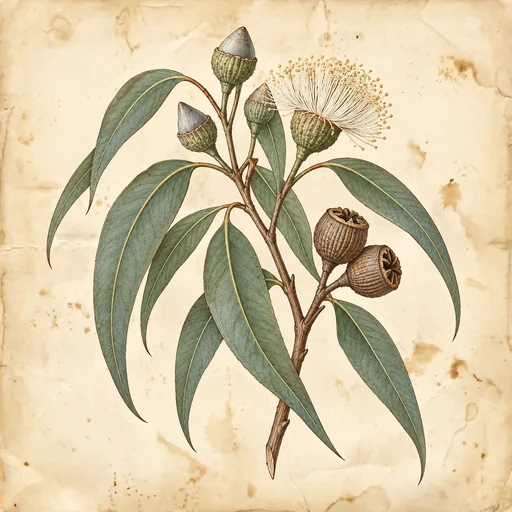
Expectorant: traditionally used to help clear bronchial mucus and support productive coughs. The leaves contain 1,8-cineole, an aromatic compound studied for its mucolytic activity.
Adult leaves
Respiratory decongestant: traditionally used in aromatic preparations during nasal congestion and colds. Their strong fragrance is mainly associated with the presence of 1,8-cineole.
Adult leaves
Respiratory antiseptic: rich in aromatic compounds showing antimicrobial activity in laboratory studies, eucalyptus leaves are traditionally used in preparations intended to support respiratory comfort.
Recipe
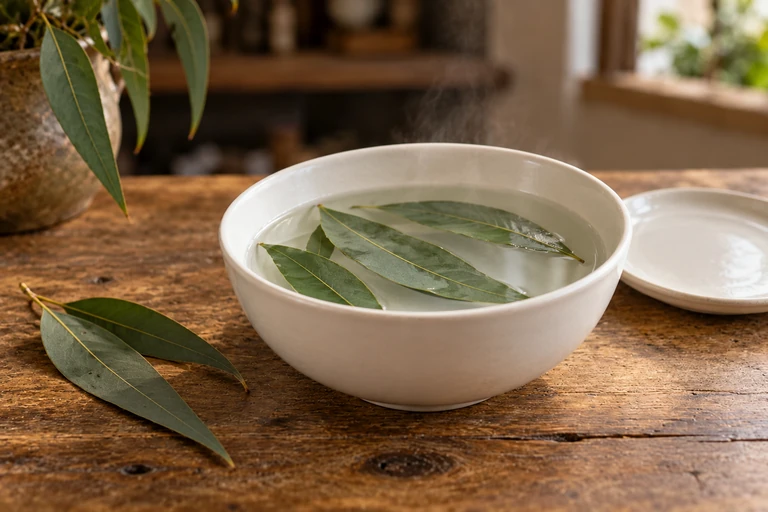
Eucalyptus Leaf Steam Bath
- Plant part
- fresh adult leaves
- Duration
- 5 to 10 minutes
Ingredients
- 3 to 5 correctly identified fresh Eucalyptus globulus leaves
- 500 ml hot, non-boiling water
- One heat-resistant container
- One lid or small plate
Preparation
- Choose clean, correctly identified adult eucalyptus leaves.
- Rinse the leaves thoroughly in clean water to remove impurities.
- Lightly crush the leaves between your fingers to release some of their aromatic compounds.
- Place the leaves in a heat-resistant container.
- Heat 500 ml of water, then let it cool slightly before pouring it over the leaves.
- Cover the container for about 5 minutes to let the leaves release their fragrance.
- Uncover the container and let the aromas diffuse in a ventilated room, keeping your face away from the hot water.
- Set the container aside once it no longer releases fragrance and let it cool before discarding the leaves.
Sources and references
- Peg Smith. California Eucalypts: Should We Love Them or Hate them? University of California Agriculture and Natural Resources. June 25, 2025. California plantings and timber difficulties.
- California State Parks. Angel Island Landscapes. Eucalyptus plantations and unsuccessful railway timber projects.
- Altmeyers Encyclopedia, Department Phytotherapy. Eucalypti folium. Traditional leaf uses and Commission E indications for respiratory tract colds.
- TRAMIL. Eucalyptus globulus. Botanical information and popular herbal uses. Context for this adapted preparation, not validation of its exact quantities or indirect diffusion method.
- NHS. Burns and scalds. Risks from hot liquids and steam; this source does not validate the eucalyptus preparation or its efficacy.