Calendula
Other plantsThe Sun’s Clock
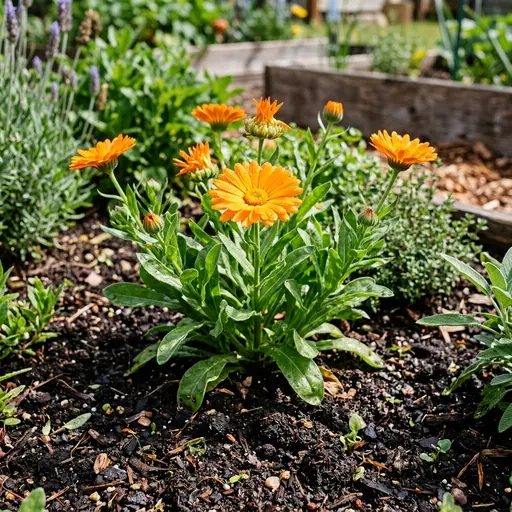
In The Winter’s Tale, Shakespeare describes the marigold as going to bed with the sun and rising with it in tears. The image came from a familiar observation: calendula flower heads open in daylight and close again in the evening. In European folklore, the plant even became a weather forecaster: if its flowers remained closed in the morning, rain was expected. Calendula thus became a small living sundial in the garden.
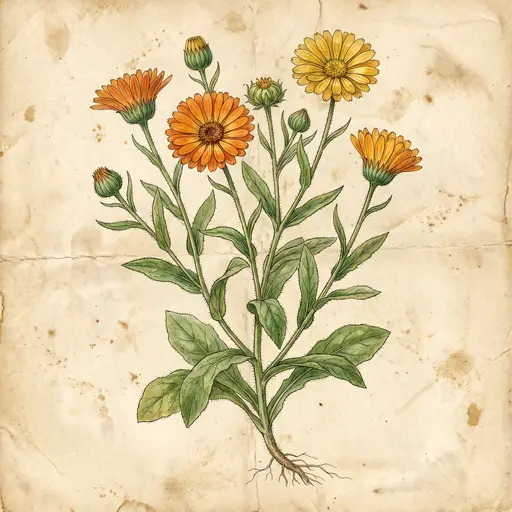
Medicinal properties
Flowers
Traditionally used topically to soothe minor skin inflammations, such as mild sunburn, and to support the repair of small superficial wounds.
Flowers
As a warm infusion or diluted preparation, they are traditionally used as a mouthwash or gargle for minor irritations of the mouth and throat.
Recipe
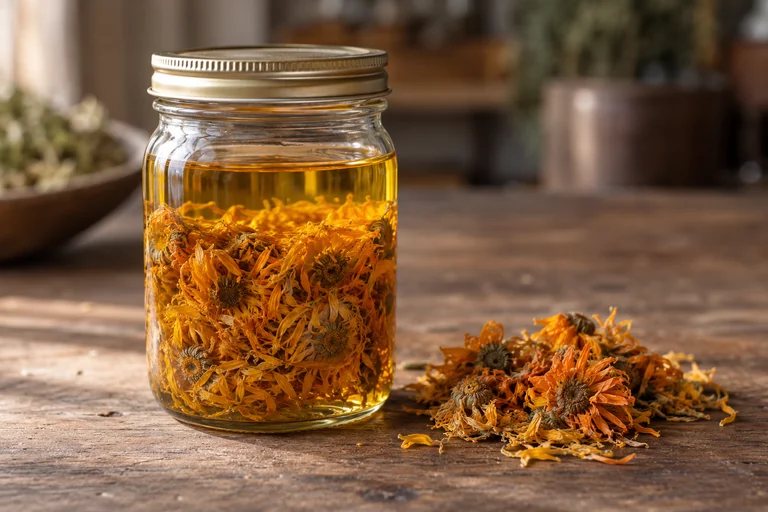
Calendula Oil Macerate
- Plant part
- flowers
- Duration
- 3 to 4 weeks
Ingredients
- Fully dried calendula flowers, enough to fill the jar ¾ full
- Olive or sunflower oil, enough to fully cover the flowers
Preparation
- Fill a clean, dry jar ¾ full with fully dried calendula flowers.
- Pour the oil over the flowers until they are fully covered.
- Seal the jar and let it macerate for 3 to 4 weeks away from direct light.
- Gently shake the jar from time to time to keep the plant material well distributed in the oil.
- Strain carefully, then pour the oil into a clean, labeled bottle.
Sources and references
- The Herb Society of America. Calendula: An Herb Society of America Guide. 2008. The Flower of the Sun and Did You Know?: Shakespeare, daily flower opening and German rain-prediction folklore.
- European Medicines Agency, HMPC. Calendulae flos - Calendula flower. Traditional use for minor skin inflammation including sunburn, minor wounds, and minor mouth or throat inflammation. Summary EMA/267467/2018.
- Morais J. Calendula Flower Oil For Body Care Products. Copyright 2012-2021. Plant Oils for Infusing Calendula Flowers and Method 1, pp. 9-10: jar ¾ full of dried whole flowers, olive or sunflower oil to cover, covered jar, shaking and filtration after 3 weeks; paper-bag variant.